
Remembering Rwanda 20 Years Later

There are some things in life that no matter how much time passes, they simply cannot be forgotten for the pain is still too much to bear. The 1994 Rwandan Genocide is one of those things.

What began in April 1994, 20 years later still seems inconceivable. More than 800,000 men, women, and children were killed in a period lasting about 100 days. The stories are almost as unbelievable as the numbers. Husbands murdered their wives. Former co-workers attacking each other. Hundreds of people barricaded themselves in a church hoping and praying the militia would not be able to break through. Sadly, they were wrong. People recall entrusting their neighbors to look after their families, only to find out some of the very people they trusted to watch over their loved ones were responsible for their deaths.

Photo: http://voiceseducation.org

The genocide was perpetrated by Hutu extremists. In Rwanda, there were to main groups of people: the Hutus and Tutsis. Though the Tutsis were the minority group making up about 15% of the population, it was they who received the preferential treatment from the Belgians who bestowed upon them favorable status and leadership positions. This is where the resentment began to build. When the bent up frustrations spilled over years later, no one could predict how deadly the results would be.

In midst of the killings however, one story emerged from the rest.

In April of 1994, just as the Rwandan Genocide was about to be underway, Paul Rusesabagina was the manager of the Hotel Des Mille Collines at the time. As the genocide erupted, Rusesabagina would house more than a thousand Tutsis from Hutu militia. 10 years later Rusesabagina’s story would play out on the big screen in the film “Hotel Rwanda,” where Rusesabagina is portrayed by Don Cheadle. It’s an incredibly powerful film and one that makes it hard to watch while maintaining a dry eye.

There aren’t enough apologies the international community can give to the people and victims of the Rwandan Genocide. If there is any solace from this horrific event, it is that today, 20 years later, Rwanda has one of the fastest growing economies in Africa and has more women in it’s government than any other nation in the world. Time may not be able to heal all wounds, but it can teach us some valuable lessons about forgiveness and moving forward.

Can’t Forget New Jersey

Two years ago today, in a packed Prudential Center in downtown Newark, the Nets said goodbye to New Jersey.

The New Jersey Nets played 35 years in the Garden State, in three different arenas, and to mostly sleepy crowds and little back page exposure. They had more losing seasons than winning ones and always seemed to fall off just as things were looking up. Being a Nets fan during the New Jersey years was often times anything but fruitful.

Drazen Petrovic
NBA.com

This was the franchise that went from winning the ABA championship with Dr. J as the league’s most marketable star, to entering the NBA a year later with no Dr. and playing at Rutgers’ athletic facility while their stadium was being built. There would be more bad news over the years: bad draft picks, washouts, trade demands, guys who didn’t care and the way too early death of Drazen Petrovic.

Despite all of this, in 1998, I won tickets to my first Nets game and been a fan ever since.

Sports wields incredible influence in American society. For me it was seeing a team representing the state I was living in and was generally fun to watch in spite of the losing. One memory in particular stands out. In 2001 I was in the barbershop and taking some good natured ribbing from my barber for being a Nets fan. Angrily, I told him the Nets would not only make the playoffs, but make the Finals and play the Lakers. He broke out in laughter and told me “that will never happen.”

One year later, it happened.

Seeing the Nets make the Finals in 2002 and 2003 are memories that I will remember for the rest of my life.

These days the Nets play on the corners of Fulton and Atlantic at the 18-month-old Barclays Center in Brooklyn. Perhaps years from now I’ll take my son to a Nets game and tell him about the wizardry of Jason Kidd, the box office appeal of Vince Carter, the euphoria of making the NBA Finals, the horrors of 12-70 and moving on from a previous identity. The stadium may be different, the uniforms may have changed, the fan base may still be relatively new, but in the end, I’ll tell my son, you can’t forget New Jersey when discussing the Nets.

Using Art to Put A Dent in Street Harassment

“Hey ma, just come over here right quick.”

“Hello sweetie you got a sec?”

“Dem clothes look real good on you. You got a man?”

These are just some of the things said to women on street corners across America every single day. Many women might continue walking and ignore the verbal slings, but artist Tatyana Fazlalizadeh decided to take a different path.

The Brooklyn resident, who herself has admitted to being street harassed, speaks to various women about their experiences with street harassment, and with their approval, draws their portraits and puts their faces up in differing locations as a way to bring attention to the issue. I think Tatyana’s project emphasizes that these taunts are going after women who possess feelings and emotions just like everyone else. And through this project, they’re not only making their voices heard, but sending a message.

//player.vimeo.com/video/91678581
Stop Telling Women To Smile from Dean Peterson on Vimeo.

Nas – The World is Yours (1994)

“The World Is Yours” is a single off of rapper Nas’ ‘Illmatic’ album that was released on April 19th, 1994. Considered one of the finest hip-hop debut albums of its time, ‘Illmatic’ is still a gem 20 years later. Nas recently released a documentary about the making and story behind ‘Illmatic’ which premiered at the Tribecca Film Festival this week. Whose world is this?

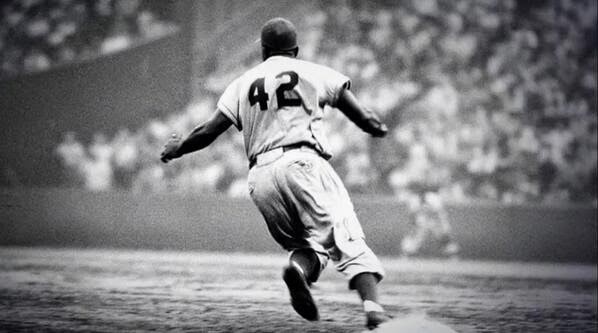
Happy Jackie Robinson Day

On this day 67 years ago, Jackie Robinson made his major league debut for the Brooklyn Dodgers and ushered in a watershed moment in American history. As the first black men to play in the big leagues, Jackie Robinson experienced insults and a racial animosity that no American athlete before — or since– has gone through. Today Major League Baseball commemorated the man who carried a burden in which we all rest upon.

A Picture is Worth A Thousand Words

I would have loved to been there to hear this conversation.

At a time when the debate over using offensive Native American caricatures is raging around teams like the Washington Redskins and Cleveland Indians, we don’t often hear from Native Americans themselves on these issues in a national context. Which brings me to the image above.

I saw this photo a few weeks back on Twitter and found it interesting for a number of reasons. For starters, hear is this white guy clearly with red coloring on his face and a shirt that says, ‘Fear the Chief.’ He is confronted by a Native American man who looks none to happy with the man’s caricature of his people. And lastly, this being 2014, there is a crowd of people in the background capturing this on their cell phones. Thoughts?