
When Love Defeated Virginia

1964 is often seen as a watershed mark in American history. It was the year of the Freedom Summer. It also marked the passage of the 1964 Civil Rights Act, which ultimately was the sledgehammer that crumbled the wall of legalized segregation. But it was a case three years later following the Civil Rights Act, that literally tugged at America’s heartstrings.

The case was known as Loving v. Virginia. It centered around an interracial couple made up of Richard Loving and his eventual wife, Mildred Jeter . Under the laws in Virginia at the time, their union violated miscegenation laws that prohibited marriage between whites and blacks. As a matter of fact, when the Lovings were married, their wedding was in a D.C. church, since their union was deemed illegal in their home state of Virginia.

Thankfully when the Lovings had their case heard by the Supreme Court, the court voted unanimously against Virginia’s miscegenation laws and ruled that people should be free to marry whomever they want, regardless of race.

Cases like this show just how far we’ve come as a society, as interracial marriage has only grown in the years since the Loving decision. Though 1967 may seem like a long while ago, my mother was alive then, which brings home the point that if you were born in the 1980s as I was, you’re really only a generation removed from this case.
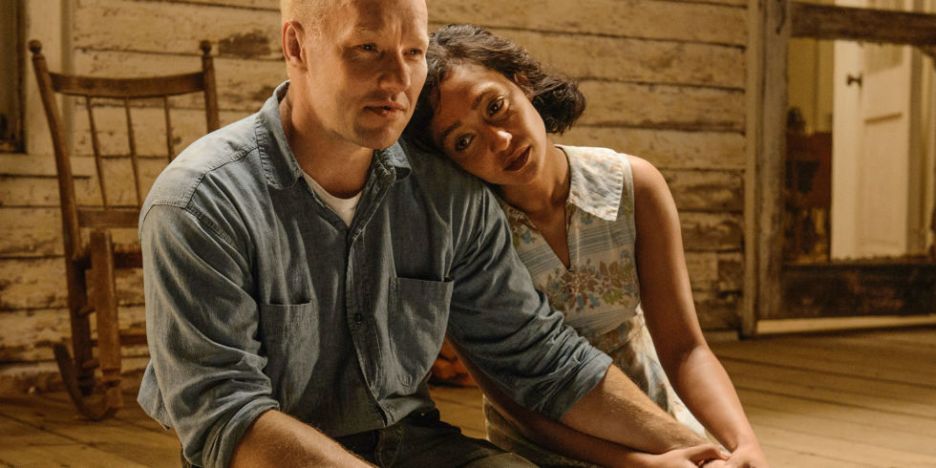
loving film

Joel Edgerton and Ruth Negga in the 2016 film “Loving”

These days, June 12th — the date when the Supreme Court ruled in favor of the Lovings — is recognized in many cities and towns across the United States as Loving Day. It’s been marked with festivals and concerts celebrating the freedom to love whom we choose. There was actually a film made about the Loving v. Virginia case in the 90s, but I found it somewhat lacking. I have yet to see the 2016 version. Regardless, this is a story worth retelling for generations to come. Below is an ABC interview from the time of the case.
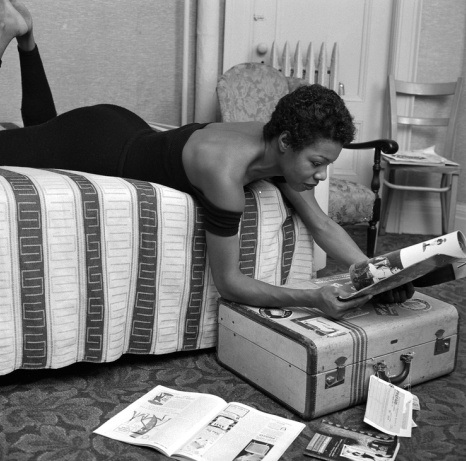
Remembering Ruby Dee

Last week, the world lost not just an actress, but an activist, pioneer and a woman who had left a legacy spanning 50+ years across the arts. Her name, was Ruby Dee.

Ruby Dee began her acting career not on the screen, but the stage. In 1959 she appeared in the play, “A Raisin In The Sun,” opposite a young Sidney Poitier. She and Poitier would reprise their roles two years later for the film version of the play.

At the time of her death, Ruby Dee had more than 100 film credits to her name. It wasn’t just her passion for acting that she was known for, but also speaking out for civil rights, especially as it related to people of color in America. This culminated in her reading a poem at the 1963 March On Washington.

Ruby Dee was also known for her marriage to fellow actor, Ossie Davis. The two appeared together in Spike Lee’s 1989 film, “Do The Right Thing.” R.I.P. Ruby Dee.

20 Years Later Shawshank is Still Cashing In

20 years in, “The Shawshank Redemption” isn’t just a great film, but one of the few that still generates generous returns for all involved.

I saw this article on MSN detailing just how ‘Shawshank’ continues to make money and how some of the actors still get recognized for their roles all these years later.

The article goes on to explain how a film like “Shawshank” is a goldmine for film libraries who license movies to television networks. “Shawshank” might be viewed as the rising tide that lifts all boats when it’s packaged with other less desirable films, but yet can still bring back a decent return for the studio. The film has made more than $100 million since its 1994 theatrical release.

The Return of Reading Rainbow?

After an eight year hiatus, “Reading Rainbow” appears to be returning.

LeVar Burton was determined to bring the show back and he went to the site Kickstarter to help raise the necessary funds for production. Burton and his crew sought to raise a cool $1 million and did so — in just 11 hours.

“Reading Rainbow” premiered in 1983 and used the medium of television to stress to children the importance of reading. The show didn’t just portray reading as some bland activity only to be done in relation to school work, but also emphasized the power of imagination and just how much one could ascertain from reading consistently.

https://www.kickstarter.com/projects/readingrainbow/bring-reading-rainbow-back-for-every-child-everywh/widget/video.html

Since its Kickstarter debut, proceeds for a “Reading Rainbow” reboot have raised more than $3.5 million. As the show’s host and most recognizable face, LeVar Burton, has pointed out these contributions show not only the strength of the “Reading Rainbow” brand, but also the soft spot that many people well into their 20s and 30s still have for the program. I certainly have fond memories of “Reading Rainbow” and am glad that it’s entering a new realm.

LeVar Burton has pointed out that the money donated towards “Reading Rainbow” will help it adapt to kids post the millennial generation. That means apps geared towards tablets and phones and the web. While a television may have been enough to reach kids in the 80s and 90s, times done changed and I’m glad to see Mr. Burton realizes that as much as anyone. Looking forward to this.

http://player.theplatform.com/p/2E2eJC/EmbeddedOffSite?guid=n_mhp_12read_140608

Remembering Maya Angelou

From thesource.com

She was a poet, an author, a dancer, a newspaper editor, a college professor and an American icon. Maya Angelou passed away last week and she leaves us as one of the most accomplished writers and titans of literature of her time.

Her book, I Know Why The Caged Bird Sings, was an autobiographical feature that touched the heart of millions. In addition to her literary works, Maya Angelou also left behind a film legacy. According to her biography website, she appeared in Alex Haley’s “Roots” in 1977 and John Singleton’s “Poetic Justice” in 1993. She directed her first feature film “Down In The Delta” in 1996. Dr. Angelou will certainly be missed.