Trippin’

Greg has everything he could ever want in life. A beautiful girlfriend, an aspiring rap career and millions of dollars to boot. Only problem is this life resides firmly in his dreams and his reality couldn’t be further from the truth. He is all the way Trippin’.

Trippin’ stars Deon Richmond as Greg Reed who is a high school senior who can’t seem to get his act together. His two best friends June (Donald Faison) and Fish (Guy Torre) aren’t much better, and the three of them are kind of seen the prototypical high school slackers.

Through the course of the film we see Greg and his friends try and figure out what they’re doing with their lives after graduation, get caught up on the bad side of local drug dealer, and deal with pressures of preparing for their senior proms.

In the midst of all this Greg can’t help but thinking about Cinny Hawkins — the girl of his dreams. Cinny is everything Greg isn’t: motivated, talented, studious, and off to college. Greg can’t seem to quite get his act together to even have a whiff of a chance of taking Cinny to the prom.

Throughout the course of the movie we see Greg has to overcome really his own demons of laziness and daydreaming to not only get his life on track, but get his love life started. Trippin’ has its comedic moments and some genuine ones as well. I wouldn’t exactly call this a ‘good’ movie necessarily, but it’s one I can enjoy and laugh at. It’s also interesting to see some of the actors in this film just really beginning to get their feet wet knowing that bigger things are coming down the road.
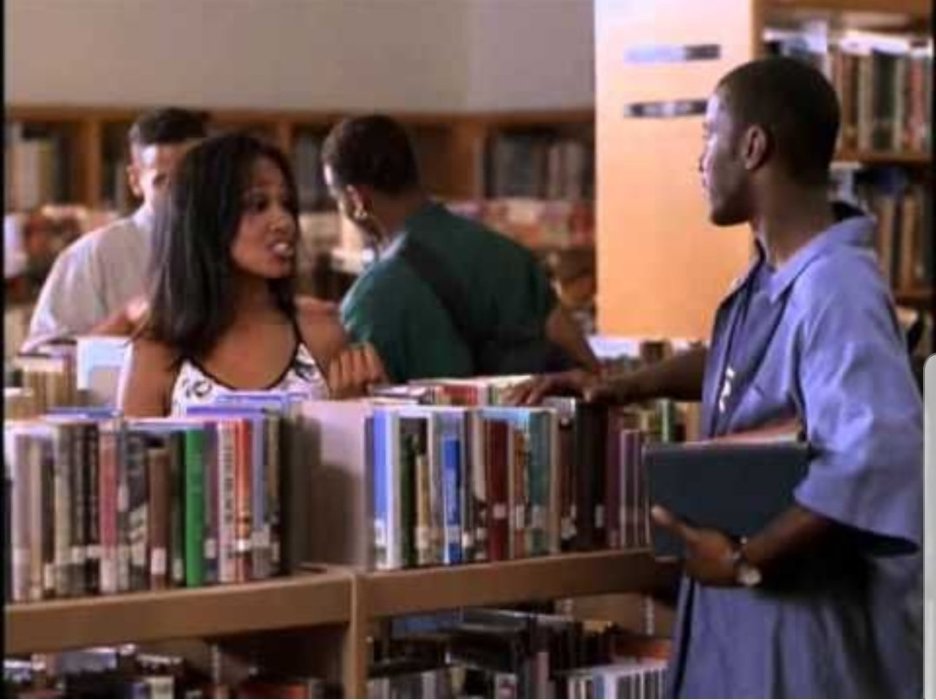
Maia Campbell and Deon Richmond


Fighting for Your Work

I saw this snippet earlier today from the Netflix account of the TV show Dear White People where show-runner Yvette Lee Bowser was speaking on how in the film and television industry you really have to hold firm to your beliefs. Or, in this particular case, the characters that you fight for.

Yvette speaks on how when she worked on the hit 90’s television show Living Single, the studio did not want her to include the character Maxine Shaw (who was played brilliantly by Erika Alexander) in the cast. According to the clip, the studio viewed the Maxine character as a little too “unapologetically black.” Yvette viewed this period as a defining moment in her career, but she was determined to keep Maxine Shaw in the show and the studio eventually approved it. The rest is history as they say. Without Maxine, Living Single is a very different show in retrospect.

Though some might view this and say, “well why all the fuss over one character?” The thing is, these aren’t just characters for a lot of people, they’re representations of who we are or who we simply aspire to be. The platform may be scripted, however the inspirational effect television and film can have on the psyche of people who rarely see themselves represented in such mediums, is often quite real. Much respect to Yvette Lee Bowser for pushing through and introducing the world to Maxine Shaw: Attorney at Law.

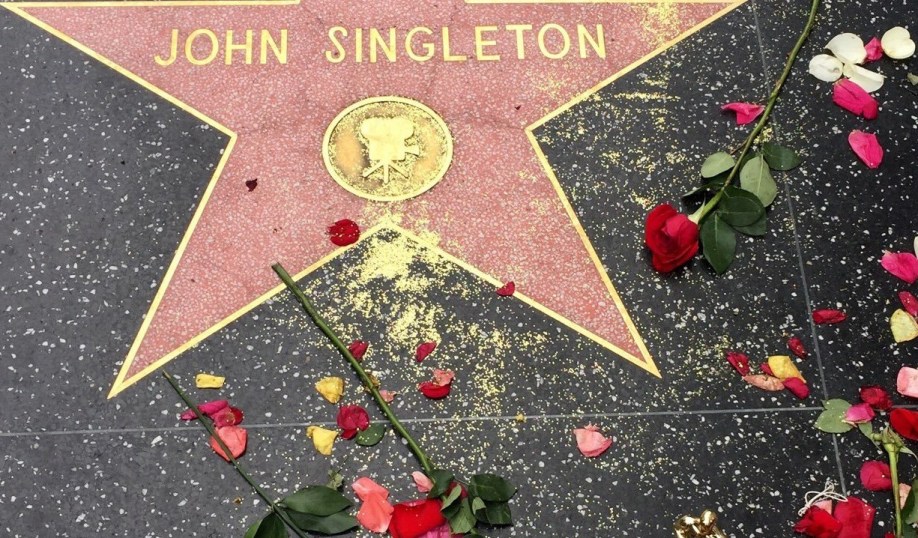
Remembering John Singleton

Life really comes at you fast sometimes. That’s how I felt when hearing about the passing of John Singleton a few weeks ago. John left behind a legacy that extended far beyond the movie screens where his films resonated.

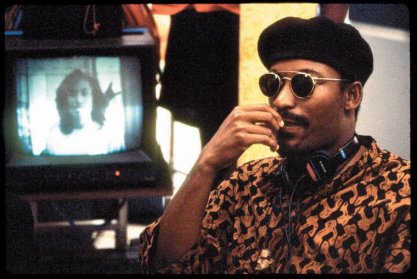
John Singleton was part of a new wave of black creators in the late 80’s and early 90’s that were really changing how black people were depicted in cinema. This is a man who was nominated for an academy award for best director at just 24-years-old — barely a year removed from film school. This is someone who through various projects worked with such luminaries in entertainment from Tupac, to Michael Jackson, Janet Jackson, Maya Angelou, Don Cheadle, Samuel L. Jackson, and Ving Rhames. His films really resonated with a number of black people who up until that point, rarely saw themselves or their stories depicted on the big screen.IMG_20190429_193226.jpg

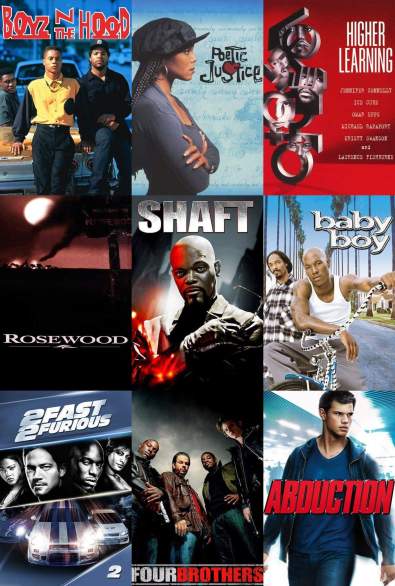
I first became aware of John Singleton’s work through the 1997 movie Rosewood. Based on a true story, the film depicts the terror that white residents inflicted against their black neighbors in 1920’s Florida when a white woman falsely accused a black man of raping her. Had it not been for this film, I probably would have never even heard of this story. Sadly, what happened in Rosewood, Florida, was not an isolated incident.

As I got a little older I gained a greater appreciation for Singleton’s work. Boyz N’ the Hood was his landmark film that put him on the map. Having grown up in Compton, California, Singleton told a story that was familiar to him. That film had a lot of nuggets in it, including a very prescient speech on the nature of gentrification.


Some of Singleton’s other work also left an indelible mark on me. Poetic Justice, Shaft, and Higher Learning (which in light of recent events, is definitely worth another look). Even some of Singleton’s later work that may not have been as well received, such as 2 Fast 2 Furious, nevertheless proved to be vitally important years later. It was that film that introduced audiences to Tyrese and a young and up and coming rapper named Ludacris. Both of these characters would become solid cogs in the series in later iterations throughout the ensuing years.

More recently, Singleton was involved in a series on FX that I rally enjoyed called Snowfall. Snowfall centered on the rise of crack cocaine in Los Angeles in the early 1980’s. It’s one of those shows where the viewer knows more than the characters in terms of how things play out, but it’s still interesting to see how things come together. Sadly, Snowfall would turn out to be John Singleton’s last project. R.I.P. to John Singleton.

IMG_20190429_191537.jpg

Some of the projects John Singleton directed/produced