
“I pounded pavements and went to every audition. That was my spirit. Work at whatever you do, whether you get paid or not.“
– Debbie Allen, Parade, November 17, 1991
Discussing the mediums of film, television and media, in relation to people of color and society
“I pounded pavements and went to every audition. That was my spirit. Work at whatever you do, whether you get paid or not.“
– Debbie Allen, Parade, November 17, 1991
Gun violence has been a hot topic here in the United States since the tragic shooting at the Sandy Hook Elementary School in Connecticut last December. As horrible as that was, the violence has been unrelenting in one of America’s largest cities — Chicago.
Through the first two months of 2013, Chicago is on pace to surpass last year’s dubious total of more than 500 murders. Regardless of where you fall in the debate on gun control, clearly there is a serious problem at hand. Just this week, a 6-month old baby girl was shot and killed as her father changed her diapers.
That’s why it’s good to hear students from Howard University going into local Chicago high schools this week and talking with students about the importance of college, education, and being a positive impact in the community. Take a look.
When the month of March rolls around, I get flashbacks. You see, while this site is just under a year-and-a-half old, media –specifically film– has intrigued me for the better part of 11 years. It’s been this fascination with moving images and the stories behind them, that has left me like a small boy chasing a dream that always seems just beyond the horizon. It all started rather simply.
March of 2002 was an interesting time. I was 6 months into my freshman year of high school, my Oakland Raiders were a winning and respectable organization, and I was witnessing a miracle at the Meadowlands as Jason Kidd was leading the then New Jersey Nets on a path to the NBA Finals. It was also the time when my family upgraded from basic cable to digital cable. I had never seen so many channels before in my life. As great as the sheer volume of channels were, it was the included movie packages that caught my attention.

One of those packages was the Starz package. It was 5 channels of the Starz network and one of those channels was strictly dedicated to people of color. It was called Black Starz and it opened my eyes to a world of cinema I had never seen before. Seeing people who looked like me headlining movies on a 24/7 basis made me wonder why there wasn’t more diversity in Hollywood in the first place. It wasn’t just feature films shown on Black Starz, but shorts and documentaries as well. Ultimately, it left me with the impression that there should be more of these films shown.
From there I began writing down the films each month that had the greatest impact on me. I called the list my ‘Movies of the Month’ list. Movies such as: “To Sir With Love II,” “Love Jones,” “Joe & Max,” “Against the Wall,” and “House Party,” were just some of the few that I wrote down. Later, I would take a few documentary courses under the journalism department at my college, getting my feet wet in the industry.
Since graduating, I’ve been able to work on documentaries, shorts, features, music videos, and now a webisode. Each time learning something new and meeting new people. Now I watch movies with a whole different perspective than I did as a teenager. Once you’ve been behind the scenes and see the amount of work that goes into making a movie, you have a whole different level of appreciation for the craft.
After a few years of working on various projects (and doing odd jobs in the process to pay the bills) I started FilmSwag in the fall of 2011. I’ve certainly learned a lot and am still learning. In the 11 years since viewing Black Starz, the technology has come a long away. It’s never been easier to start filming your own projects. HD video was not readily available to many in ’02, now most cell phones come equipped with 720p or 1080p cameras. Youtube has opened up the platform immensely for aspiring filmmakers. And the rise of social media like Twitter and Facebook have made it easier to connect with one another in record time around the globe. So now in 2013 as there are many more avenues for our stories to be told, I continue to keep learning as much as possible, just like when I started out 11 years ago.
It’s often a joke that Black History Month takes place during the shortest month of the year. However, the lack of history — especially cinematic history of African Americans — taught in schools is no laughing matter. This lack of teaching can often be reflected in embarrassing displays of ignorance, despite the best intentions.
I remember one night during my sophomore year of college heading to the video section of the on campus library to rent a movie for a class project. It was February and so there were a few things going on in regards to Black History Month. As I’m walking towards the video department, I notice a display case with a sign above it that reads something along the lines of “Black History Month Films.” I took a peek at what films were in the display case and after seeing the selection of movies, I was ready to slap somebody. Stepin’ Fetchit, “Gone With the Wind,” “The Amos n’ Andy Show,” and, drum roll please . . . “Booty Call.” These were the names and films chosen to ‘honor’ Black History Month.
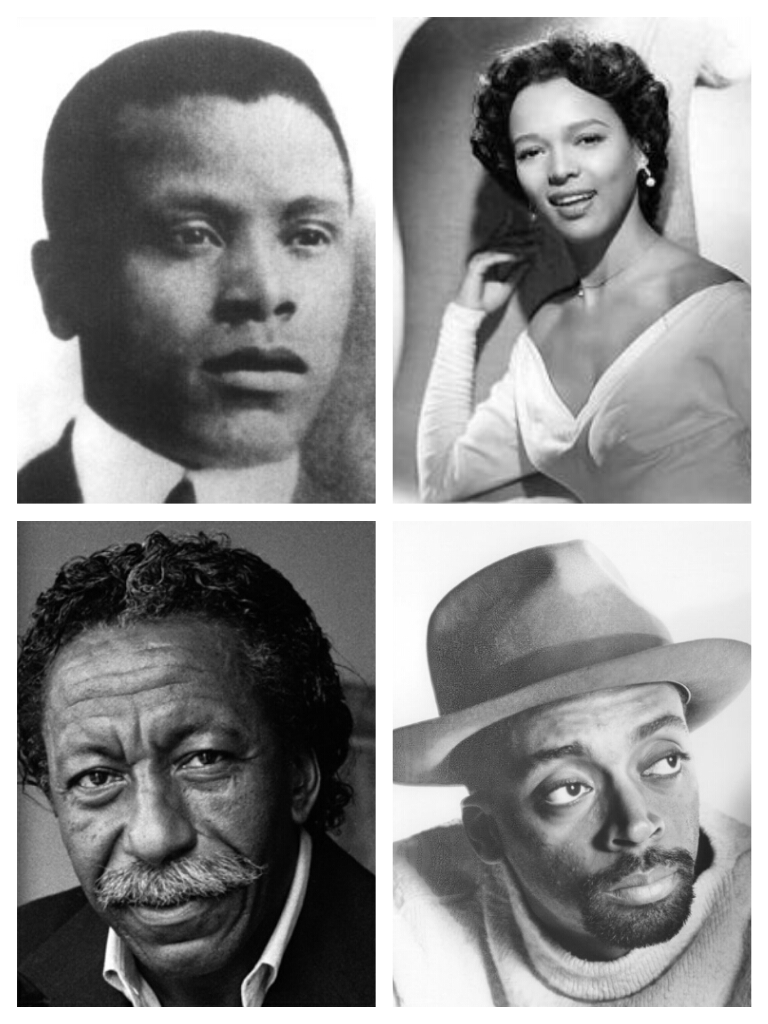
After being shocked and disappointed at the displayed movies, I wrote a letter to one of the people in charge at the library and he responded basically saying that he apologizes and honestly didn’t realize the offensive nature of the films displayed. This begs the question, why wasn’t he aware that these films might be controversial, and how come not one person rose their hand and suggested that perhaps featuring “Booty Call” for a Black History Month display was not the smartest of ideas?
Ultimately, I don’t believe there was any malicious intent involved with the choice of movies displayed, but there was a heavy dose of ignorance present. If these types of mistakes can happen at an institution of higher learning, then what does that say about the rest of our society? Not enough people know about Dorothy Dandridge, or the man known as the godfather of black cinema — Oscar Micheaux. Everybody’s heard of “Shaft,” but what about the man who directed it? Even the work of more current people like Spike Lee, Kasi Lemmons, and Julie Dash, could have been featured in that display case, but weren’t. What does this all mean? That when it comes to black history, if we really want to begin to understand the stories of more than 400 years in this country, 28 days in February is only the beginning of what should be a 365 day process.
A very good interview with Louis Gossett Jr. on the triumphs and challenges of winning an Oscar and then struggling to find work in the aftermath. Gossett speaks glowingly of working on the groundbreaking TV mini-series “Roots,” how he started out, battling alcoholism, and his current work with his foundation Eracism. Definitely worth the read.
Check it out here.

Image courtesy of The Root
In a in-depth and well written article, author and filmmaker Nelson George looks at the significance of black male characters in some of 2012’s most heralded films. George gives a hard look at “Lincoln,” “Flight,” “Beasts of the Southern Wild,”and Quentin Tarantino’s “Django,” and the role the men in these movies play and their importance in overarching themes. I definitely suggest sitting down, having a cup of coffee, and taking a look at this NY Times piece.
You can read it here.

Image courtesy of the New York Times
When we talk about the Civil Rights Movement in the United States, there are a few names that stand above the rest. Dr. Martin Luther King. Rosa Parks. Jesse Jackson. All very important and influential people. However, it could be said that the legacy of Malcolm X — perhaps not as clean cut as those other Civil Rights icons — is no less important and should not be treated as such. Fortunately for Malcolm, on this day 48 years after his assassination, his legacy is more than just a man known as a fire-and-brimstone orator, but as a man whose rise and conversion later in life was nothing short of remarkable.
In 1992, the biographical film “Malcolm X” was released starring Denzel Washington as Malcolm X and directed by Spike Lee. The film portrayed a man far deeper than just the angry dude pointing his finger in most textbooks. In the film we see a young Malcolm terrified as the Ku Klux Klan burns a cross on his lawn at his home in Nebraska. We see Malcolm’s maturation from a young hustler, to an educated prisoner, and eventually into one of the key leaders for the nation of Islam. Along the way we watch Malcolm become transformed with a pilgrimage to Mecca. Finally, there’s the dramatic scene of Malcolm’s death.

Personally, I thought the film was well done. Denzel was of course excellent, and I felt Spike did a good job of showing the audience the different moods and complexities of Malcolm X. Too often it becomes easy to label people –especially historical figures– through the narrow prism of good, bad, or insignificant. “Malcolm X” doesn’t allow for such easy assertions.
It’s worth noting that while filming “Malcolm X” Spike Lee went over the initial budget set by the studio and hence was fighting to secure more money to get the film released. Warner Brothers refused to pony up more cash and that’s when some well known African Americans stepped up and contributed to the project. Micheal Jordan, Magic Johnson, Bill Cosby, Janet Jackson, and Prince, were just some of the people who contributed to making this movie a reality.
“Malcolm X” was critically acclaimed upon release and opened many people’s eyes (including mine) to who he was and the legacy he left behind. 48 years later after his death, people continue to be educated.
 FilmSwag