
Looking Back 20 Years Later at "Just Another Girl on the I.R.T."

Last month I had the opportunity to catch a screening of the profound and powerful film “Just Another Girl on the I.R.T.,” marking the film’s 20th anniversary. Even now, 20 years later, the film’s themes remain as strong as ever as it continues to educate, inspire, and enlighten.

“Just Another Girl on the I.R.T.” tells the story of Chantel Mitchell (played by Ariyan Johnson) as she navigates her senior year of high school. Chantel aspires to be a doctor, and she has the grades and aptitude to achieve it. Unfortunately, Chantel also has a bit of an attitude problem to go along with a foul mouth, much to the chagrin of her teachers. Later in the movie we see Chantel as she meets her new boyfriend at a party, gets pregnant, and undergoes a transformation from hopeful college-bound student, to pregnant teenager trying to grasp her new role as expectant mother, lover, and friend.

What makes “Just Another Girl” different from your classic teenager-gets-pregnant drama, is that Chantel doesn’t fit the stereotype. Here’s a young woman who plans on going to college and becoming a doctor. She has her head on straight and her academic aptitude is never in question. Even after becoming pregnant, Chantel continues to go to school and pursue her dream of going to college. The fact that this story is told through the eyes of a black woman was especially important for director Leslie Harris.

When “Just Another Girl” came out it in 1993, it was released at a time when there seemed to be a heightened interest in urban dramas. Flicks such as “Boys N’ The Hood,” “Menace II Society,” and “Straight Out of Brooklyn,” were captivating media attention and audiences unlike anything seen before. These films often overtly centered around men with women reduced to little more than ancillary roles. “Just Another Girl” broke the mold in not only featuring a black woman as the lead, but by also being directed and produced by a black woman.

In the videos featured below, director Leslie Harris and Ariyan Johnson discuss the impact of “Just Another Girl” and the significance of women of color in cinema and television.

Editors Note: For some reason there are about 10 seconds of audio missing in each video. Not sure why, but I blame the phone for that.

MSNBC Makes Serious Gains Among Black Audiences

I remember a few years ago watching a news program with a college buddy of mine who was from Ethiopia. After a few moments, he remarked: “Warin, not to be offensive, but all of the news anchors I ever see on these programs are all white. Why is that?” Interesting question, indeed.

Now a few years later, it seems networks such as MSNBC are beginning to turn the tide. MSNBC just recently indicated that it has seen a 60% growth in its black audience viewership within the last year, making it the number one channel in that demographic. Rival CNN saw over a 20% increase in its black viewers. Why is this significant you may ask?

                                                  MSNBC anchor Tamron Hall

Simply put, MSNBC has arguably the most diverse set of anchors of any cable news network today. There’s the Rev. Al Sharpton, Tamron Hall, Toure’, and Melissa Harris-Perry. Not to mention frequent guests like Goldie Taylor and notable scholar, Micheal Eric Dyson. Not only do these hosts bring diversity, they also being a different perspective to the national discussion. And considering the United States is becoming more diverse with each passing year, MSNBC is quickly reaping the benefits of a more reflective newscast.

MSNBC president, Phil Griffin, talks more about the gains here.

Where Art Thou Black Rom-Coms?

This article originally posted by Chevonne Harris of Aol’s Huffington Post, explores her frustration with the lack of quality titles featuring African Americans in the romantic-comedy genre.

Her concerns are not a new one, nor are they unique to her. I’ve heard many people lament the lack of quality movies featuring people of color not only at the box office, but also in the search results of their Netflix account.

Ultimately, this comes down to a lack of representation for many people of color. Why should we “settle” for one to two mainstream ‘black’ romantic films per year? This still is a problem in Hollywood, although recent advances in technology -such as webisodes- are proving to be a viable alternative with each passing year. What are your thoughts?

Slavery Makes A Comeback in Recent Films

It is fitting that the Emancipation Proclamation turns 150-years-old this month, during a time in which slavery is receiving more media attention than at any time in the last 30 years.

Just in the last few weeks alone, “Django Unchained” was released, “Lincoln” hit theaters, and BET showed the mini-series “Roots” in the days leading up to Christmas.

The subject of slavery has historically been what I referred to as America’s ‘Black Box.’ Everyone knows it’s there, but few are willing to acknowledge its presence, and even fewer are willing to open the box and dig into its varied contents.

When “Roots” debuted in 1977, it was groundbreaking on so many levels. “Roots” tells the story of Alex Haley’s family from first being kidnapped in Africa, to the trials and tribulations of slavery, and ultimately, freedom. Never before had the American public dealt with the depths of slavery told through the eyes of people of color on such a public platform before. “Roots” would go on to be one of the most watched television series in American history. BET was honoring the 35th anniversary of “Roots” and I was glad they showed it because many in my generation (those under 30) may not have had the opportunity to see it before.

Though I have yet to see “Django Unchained,” just based off friends I know and those on Twitter, the grand majority of people seemed to have enjoyed it. It is not often that a movie encompassing the decidedly serious subject of slavery would be described as entertaining and enjoyable, but this movie seems to have accomplished just that for a number of people. Meanwhile, as good of a job as people say Daniel Day-Lewis does of portraying Abraham Lincoln in “Lincoln,” many are dissatisfied at the apparent absence of Fredrick Douglass anywhere in the movie.

The topic of slavery in film is not a new one. It was touched on as far back as “Gone With The Wind” in 1939, and in more recent films such as “Glory” in 1989 and “Amistad” in 1997. In 1998 Oprah Winfrey and Danny Glover starred in the film “Beloved,” that centered around a couple trying to rebuild their lives following slavery. The movie didn’t do well in theaters, perhaps a reflection of the sensitive and uncomfortable topic that is American slavery.

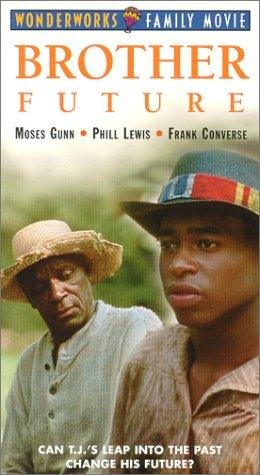
One such ‘slavery’ movie that had a profound impact on me, was “Brother Future.” “Brother Future” stars Phil Lewis as T.J., a young hustler who’s all about himself. T.J. is growing up in present day Detroit (which when this movie was filmed was about circa 1990) and we meet him as he’s running from the police. He gets hit by a cop car and knocked unconscious. Instead of waking up on the concrete, he wakes up in the year 1822, in Charleston, South Carolina.

While on the plantation, T.J meets Denmark Vesey, a man who was a real life slave at one point and who organized one of the largest slave rebellions in U.S. history that was ultimately put down before it even began. T.J. sees first hand as a fellow slave is whipped and beaten because he was caught trying to learn how to read. He also meets a slave woman who works as a maid, and informs him that the only way he will get back home to Detroit, is if he commits to helping one of the people on the plantation. T.J. ultimately risks his life to lead a young couple to freedom.

Here’s some of the opening scenes from “Brother Future.”

Here are some scenes that include Denmark Vesey and one of the slaves being punished for reading.

I think it is good that there are films dealing with slavery, if only on the periphery. It is important that we not forget that slavery as an institution is older than this nation itself (the United States that is). One of the best ways to educate people is to inform them. However, before people can be informed on a particular issue, they must at first be made aware of seriousness of it. These movies are doing just that.

My 2012 Movie of the Year and Moving Ahead to 2013

As I look back at 2012 I see a year of progress and a year to build on.

2012 was the year that internet sensation and Youtube star, Issa Rae (who created, produced and directed the hit series Awkward Black Girl) teamed up with Shonda Rhimes to collaborate for an upcoming comedy series for ABC. This development was huge for Rae of course, but it also marked the first time a webisode focusing on a character of color paved the way for a transition to the small screen. The web is increasingly becoming a backdoor way to breaking into traditional forms of media, like film and television.

2012 was the year that Matthew Cherry directed his first feature film, “The Last Fall” and saw it receive critical acclaim along with a number of accolades.

2012 was also the year that Ava DuVernay’s distribution company, AFFRM, released “Restless City” and my film of the year, “Middle of Nowhere.” “Middle of Nowhere,” revolves around the relationships of the main character, Ruby (Emayatzy Corinealdi), with her imprisoned husband, family, and busdriver turned lover (David Oyelowo). The cinematography is beautiful and the scenes poignant. The film does a good job letting the audience follow along as Ruby deals with varying degrees of hurt, mistrust, love, acceptance and discovery.

Finally, 2012 marked the first full calendar year of FilmSwag’s existence. I definitely appreciate all of you who have checked out this blog and recommended it to your friends. So far FilmSwag has been viewed by people in more than 40 countries on 6 different continents (one day I’ll get someone in Antarctica). I definitely have more topics and things I’ll be covering in 2013. Also, if you guys have anything you’d like to see me cover reach out to me at: warin@filmswag.org. I’ll be posting more photos, videos, and also looking to incorporate screenings and events for those of you in the NYC area. Peace, Love, and Happy New Year Everyone.