When Violence Goes Viral: The Social Repercussions of Standing By

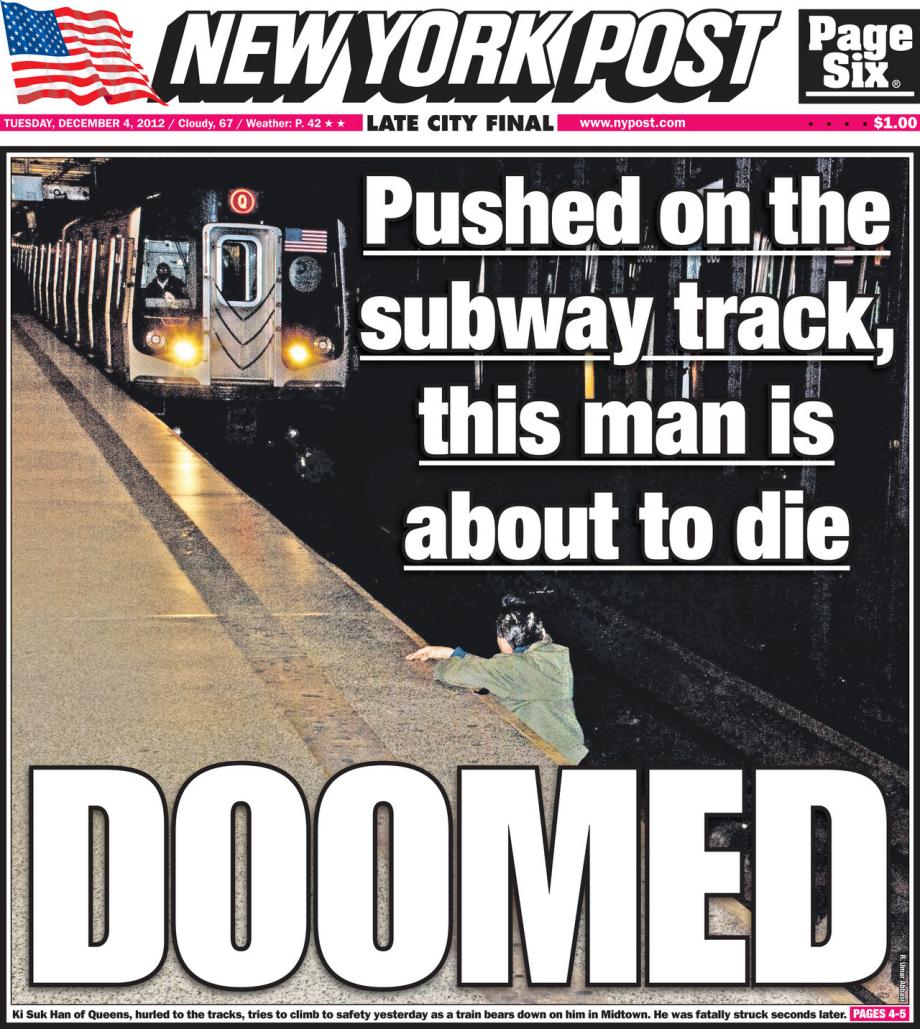
Earlier this month, a man was pushed down a subway tunnel and could not be saved. But his snapshot was.

That event sparked not only every New Yorker’s most subconscious fear -standing too close to the edge of a platform and being pushed over- but also outrage for the lack of action taken to save a man fighting to get out of the path of an oncoming train. The most glaring outrage was directed at photographer R. Umar Abbasi, for taking a photo of the man just before he was struck by the train. The NY Post would publish the haunting photo the next day.
This isn’t the first instance of video or photos showing a person in danger.

In October, a video went viral of a Cleveland bus driver getting into an argument with a female passenger. The argument escalates and then the uppercut from hell is unleashed.

By videotaping this incident, it went from an outrageous event on a Cleveland bus, to leading newscasts, to trending on Twitter and in the process became one of 2012’s top web sensations. Police were called and the bus driver subsequently lost his job. Violence being filmed and recorded for the pleasure and delight of others is not just limited to Cleveland however.

In January 2011, Allen Haywood was waiting for his train at a metro station in Washington, D.C. As the video shows, two kids come from out of nowhere and begin pummeling the man. Haywood is understandably stunned as to why he is being attacked. He even screams at the girl who is attacking him: “I have done nothing to you!”

Even sadder is the fact there appears to be a group of kids in the background just laughing while filming the incident on their cell phones. Haywood says none of the kids came to his assistance, nobody called for help and that other people on the platform did nothing. A few days later, Haywood returned to that same metro station and held up a sign saying, “I WAS ATTACKED AT L’ENFANT METRO SUNDAY AT 7:15 PM. NO ONE HELPED. PLEASE BE CAREFUL.”

All of these cases leave one wondering when did we become a society more concerned about capturing the next punch or assault on video, as opposed to actually putting down the cell phone and doing something about it? What moral and ethical questions are there as bystanders in these situations? It is one thing to not want to get involved in an altercation for fear you yourself might get injured. It is entirely different however, to do nothing at all. Things to think about…
The Use of Media in the Recognition of World AIDS Day

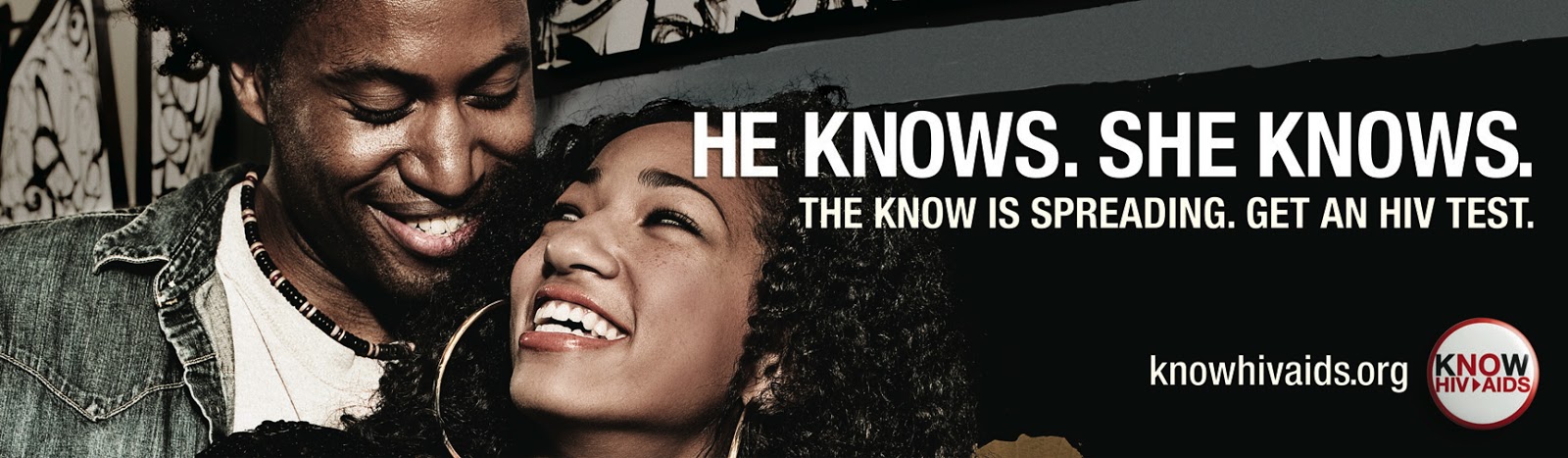
Yesterday, December 1st, was World AIDS Day. Since 1988 World AIDS Day has been recognized as a day to not only remember those who have passed from the disease, but also to acknowledge the more than 30 million people worldwide still fighting with it every day.

The awareness of AIDS by individual people, communities, cities, nations and the global community, has come a long way since AIDS was first diagnosed in 1981. Looking back on media and newspaper articles from the late 80s and early 90s shows just how far we’ve come as a society in accepting people with the disease. That’s not to suggest that everyone thinks like this or that there is no longer a stigma associated with AIDS, but it is no longer as publicly denounced as it once was.

Speaking of the public, it seems more and more organizations and entities are getting involved with recognizing World AIDS day every year. The red ribbons have seemingly become ubiquitous. Starbucks, Apple and even the National Basketball Association, have taken part in recent years in bringing awareness to the day. So too has the film and television industry with commercials and ads promoting the importance of getting tested.

In 1993 two Hollywood films were among the first of their kind to not only delve into this still relatively unknown disease at the time, but also explore the evolving social impacts it was having as well.

“And the Band Played On,” was a made for TV movie that dealt with the early years of AIDS and how doctors and scientists struggled initially to figure out where this disease that was suddenly killing people out of nowhere was coming from. The movie also depicted the battle of who would ultimately claim credit for “discovering” the disease.

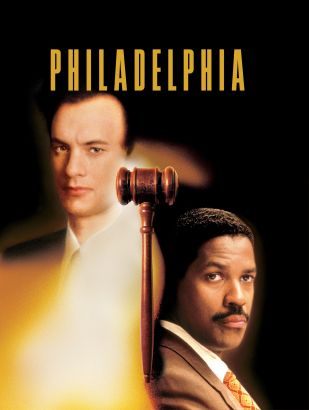
Another movie that year was “Philadelphia,” starring two of perhaps the greatest actors of their generation: Tom Hanks and Denzel Washington.

Hanks portrays Andrew Beckett, a gay man who was working in a law firm and was on the rise until he contracted AIDS. Beckett was assigned the firm’s most important case, but was removed and subsequently fired once the lesions associated with AIDS began to appear on his face. Beckett hires Joe Miller (Washington) a man who is battling with his own discriminatory attitudes towards homosexuality, but agrees to take on the case anyway. One of the most memorable scenes in “Philadelphia” involves Beckett removing his shirt to show the lesions that led to his firing.

Scenes such as these are not only touching, but moving. It also helps humanize Hanks’ character beyond just a man who lost his job due to AIDS, to a man who must now cope with having to deal with the cold shoulder of people he once considered his friends and co-workers.

Recognition and awareness about HIV/AIDS is only the first step. We have to continue to make sure that the millions who are still suffering from this disease are not forgotten about and are able to get the necessary help and attention that they need. That’s why I applaud AIDS activist Hydeia Broadbent for the work that she continues to do in bringing awareness to AIDS and making sure that it remains a part of the national conversation. Stay safe everybody.

Charles S. Dutton on the Difference Between Entertainers, Actors and Artists

“An entertainer will do anything. An actor will do most things. But an artist will only do those things he or she feels advances civilization.”
                                                           
                                                                                       – Charles S. Dutton

1 Year of FilmSwaggin

My oh my how the time flies.

I started this blog a year ago today because I felt it was finally time to express some of the thoughts that had travelling around in my head for months, or in some cases, years. FilmSwag is more than just a blog I feel. It gives me a platform to reach people and speak on topics that I might otherwise only discuss with certain audiences or in particular settings.

In this day age, media is ever present in most of our lives. And the mediums in which we entertain such media are constantly evolving. From Twitter, to Facebook, to iPads, to HDTV, and Hulu and Youtube and countless others, we are being bombarded by images and stories coming at us like a thousand small comets all vying for our attention across the night sky. It is within this vast realm of media that I started FilmSwag because not all media is created equal and not every story gets told.

Too often people of color have a harder time getting their films financed. Black actors can be nominated for an Oscar one year and completely fall off the map the next. Or what about actors of a certain ethnicity who get typecast in the same role over again? These are just some of the stories that interest me and were the inspiration behind FilmSwag.

This past year has been mostly articles and the occasional music video featured on this site. Within the next few months I’m looking at doing more features on people and their legacies, highlighting up and coming filmmakers and media mavens, and hopefully including some of my own video work. I want to Thank everyone who has ever viewed this site or told a friend about it. I’m proud to say that FilmSwag has been viewed by people in dozens of countries on 6 different continents (still waiting on you, Antarctica). Let’s keep getting educated together.


Looking at Nina Through A Different Hue

So I heard about this casting snafu a few weeks back, but it wasn’t until a friend enlightened me about it that I began to take notice.

Apparently there is a biopic being done of the late great Nina Simone. Simone was more than just a singer. She was an activist, intellect, and a woman whose words and music influenced millions of people. Her round nose, dark hue, and potent afro, only helped to accentuate the struggle for Civil Rights during the turbulent 1960s.


Now it has come to light that director Cynthia Mort plans on doing a biopic of Nina Simone entitled, “Nina.” It is worth noting that whenever this movie comes out, it will be done without the blessing of the Nina Simone estate. Simone’s daughter lambasted the yet to be released film, but it appears all systems go with the casting of lead actress Zoe Saldana in the role of Simone.

This is where things get tricky. While I certainly appreciate the work of Zoe Saldana, it is worth noting that she looks nothing like Nina Simone. Some of you may say, “Well the actor doesn’t always have to look like the person they’re portraying.” And in many cases you would be right. However, because of who Simone was and the time in which she lived, and because her looks and features were so closely tied to her music and the movements of a nation, the looks of the actress portraying her do matter somewhat.

Now this isn’t to say Zoe Saldana is not permitted to play Nina Simone because of her lighter skin and more European features, I’m just saying there are better choices out there. For one, I think India Arie would be perfect. Not only because she looks more like Simone, but because unlike Saldana, Arie comes from a musical background. This is key in that audiences might be more inclined to believe India Arie as Simone than Saldana.

Photo Courtesy of Uptown Magazine

The casting of Zoe Saldana has made some people just downright mad. There is currently an online petition sponsored by one website that wants Saldana replaced from the film. A number of blogs and movie sites have picked up on this issue. Extensive debates have been taking place on Twitter and Facebook about just who has the right to portray who and the historical significance of this. Even the New York Times devoted an article to the Saldana controversy last week.

I think it is good that this issue of casting is being discussed and that people are taking notice. I also believe we’re treading down a dangerous slope when large swaths of people demand an actor be removed from a film because they don’t believe that the actor looks enough like the person whom they are portraying. Only time will tell if the director made the right decision in casting Saldana as Simone.

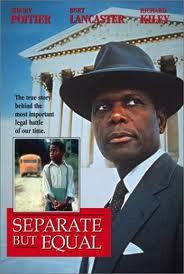
One thing people should keep in mind though, is that this is not the first time a black actor has portrayed a black icon of whom they bear little physical resemblance to. In the 1991 made for TV movie “Separate But Equal,” Sidney Poitier portrayed former Supreme Court Justice Thurgood Marshall. Poitier looks nothing like Marshall, but there were no protests or petitions decrying such discrepancies. Perhaps, something to think about.


If You Went Missing…Would Anyone Come Looking? A Review of Dreams of a Life

How close are we really to the people in our lives?

I first heard about this film more than a year ago courtesy of the indiewire site ShadowandAct. Ever since then, I’ve been curious about it’s development and finally its release.

“Dreams of a Life” is a documentary/drama based off the life and subsequent death of one Joyce Vincent. The movie is told through the perspective of her friends (if they can be called that), acquaintances, and associates, all people whom knew little pieces of her, but none who really “knew” her as the story would later reveal.

What makes the story of Joyce Vincent so intriguing, and sad, is not the fact that she was found dead in her apartment with the TV on in 2006. It’s the fact that by the time she had been discovered, she had been dead for three years. Yes, three full years. Joy Vincent died around Christmas of 2003 and no one became aware of this until 2006.

In this day and age of Facebook, broadband internet, e-mail, cell phones, and dozens of other ways of communication, this film makes one wonder just how the hell does this happen?

“Dreams of a Life,” doesn’t seek to provide solid answers to that question, but gives us a glimpse into Joyce’s life through people who apparently thought they knew her. It seems Joyce was different things to different people, and allowed no one to get close enough to find out who the “real” Joyce Vincent was.

This was not an easy film to watch. Of course, the viewer knows going in that this will not be a film that’ll leave you laughing and smiling when you leave the theater. Even still, it is tough to see her former boyfriend admit that had they gotten married, she might still be alive. Or close friends not realizing she was being abused until years after of the fact. The hardest might be knowing that Joyce had four older sisters who didn’t even bother to inquire about her after not seeing her for years.

“Dreams of a Life” is a film that challenges one’s perception of what it means to really “know” somebody. How closely do we value our friends? If we went missing for a prolonged period of time, would someone come searching for us? Do we believe our presence in society to be greater than it actually is? All things to think about.

http://dreamsofalife.com/

Diversifying The American TV Family

A few weeks ago on the African-American themed cable station Centric, I came across a show by the name of “227” that piqued my interest.

“227” revolved around the daily lives and experiences of a middle class black family residing in 1980s Washington D.C. The show starred actress Marla Gibbs, who had achieved fame as the maid in “The Jeffersons.” Also featured was a young Regina King in what would be her first substantive role in a long career. Then there was Jackee Harry, who is probably better known to my generation as the television mother to this famous set of twins.

This got me curious. When people think about a prominent black family featured on television, one of the first images that probably comes to mind is “The Cosby Show.” After all, “The Cosbys” featured a ‘well off’ black family headed by doctor Cliff Huxtable (Bill Cosby) and his lawyer wife, Clair Huxtable (Phylicia Rashad). The couple had five kids between them and resided in a place that’s come a long way from when the show first aired: Brooklyn.

Some criticized “The Cosbys” saying it wasn’t a realistic portrayal of how the majority of black people were living at the time and that it was almost a little too perfect. Damned if you do, damned if don’t, I say. What I don’t think can be lost is that while “The Cosbys” may have been somewhat unrealistic for many people of color at the time, it doesn’t mean the show had any less of an impact to the people who tuned in every week. “The Cosbys” would in fact open the door for another well heeled African-American family while setting the stage for one of Hollywood’s most bankable stars. Only this family was situated a little further to the west. About 3,000 miles west.

When “The Fresh Prince of Bel-Air” debuted on NBC in September 1990, nobody could have foreseen it becoming one of the primer shows of a generation. Even now, years later, your bound to get a group of people singing along to that catchy opening theme song. “The Fresh Prince” touched on a variety of issues regarding everything from racial profiling, to dating, to Will’s antics with his Uncle Phil. “Fresh Prince” didn’t just make you laugh, it could also enlighten as well, while generally being safe for younger audiences so that everyone could watch.

These were just a few shows that helped diversify the American family television landscape, but they were far from the only ones. Here’s a few more, stretching from the mid-70s to as recently as a few years ago:

“The Jeffersons” (1975-1985)

“The Cosby Show” (1984-1992)

“227” (1985-1990)

“Family Matters” (1989-1998)

“The Fresh Prince of Bel Air” (1990-1996)

“The Hughleys” (1998-2002)

“My Wife and Kids” (2001-2005)

“George Lopez” (2002-2007)

Some South African Kwaito

I first saw this music video 4 years ago while in college among a group of African friends. It has a catchy beat and I definitely dig the boxing theme.

Though it is only one video, it does show how media -specifically hip-hop in this case- can travel to other corners of the world and be infused with cultural residue of that particular region. 4 years later, I still don’t understand a single word these guys are saying, but I can appreciate the music and its accompanying video nonetheless.

Seeing people and images around the world can not only entertain us, but gives us a greater appreciation of an art form in its varying depictions.

A Salute to Black Military Film Roles on This Memorial Day

Today we remember all of those who risked their lives and who paid the ultimate sacrifice for our freedoms.

Film has often done an excellent job of telling these various war stories and allowing us to get more of an intimate look at the men and women behind the uniforms.

For black veterans the medium of film has also served as a way of illuminating their stories to the mainstream public at large. Whether it was due to racism or simply just being forgotten about, film has allowed the stories of more (certainly not enough though) veterans of color the opportunity to not only have their stories told, but get the proper due for their heroism.

Here are some films featuring African Americans and their roles in the armed forces and protecting our freedom:

Louis Gosset Jr. “An Officer and A Gentleman” (1982)


Denzel Washington and Morgan Freeman “Glory” (1989)


Samuel L. Jackson  “Assualt at West Point” (1994)

“The Tuskegee Airmen” (1995)

Cuba Gooding Jr. “Men of Honor” (2000)

With the exception of “An Officer and A Gentlemen,” all these films are based on true events. Truth be told, I would have known a lot less about these people and their stories if not for their onscreen depictions. In fact, these movies did more than educate. One of them even cleared a name.

The film “Assualt at West Point,” which featured Samuel L. Jackson, was based off the true story of Johnson Chestnut Whittaker, who was the first black man to be accepted into West Point. Whittaker was assaulted by his peers and accused of faking the incident. Whittaker was found guilty and subsequently expelled in 1881. By the time “Assualt at West Point” had aired in 1994, a movement to clear Whittaker’s name was in full effect, and in 1995 then President Clinton presented a posthumous commission to Whittaker’s family.

It is important that we not forget the sacrifices of those who have served in the armed forces have made for us on this day. Not everyone has a movie made about their lives or achievements, but every person who has ever fought for this country certainly deserves the respect and gratitude of all Americans on this Memorial Day.