
In a beautiful speech last week at the 2013 Film Independent Forum, filmmaker Ava DuVernay spoke to making do with what you have and being your own catalyst when it comes to making films. Replacing desperation with passion and putting in the work is what moves your forward. Check it out below.
Film
Actors Discuss Legacy of Roots
With the film “12 Years A Slave” debuting this week, I figured it was a good time to revisit a panel discussion I shot earlier this year revolving around one of the most prominent depictions of slavery in media.
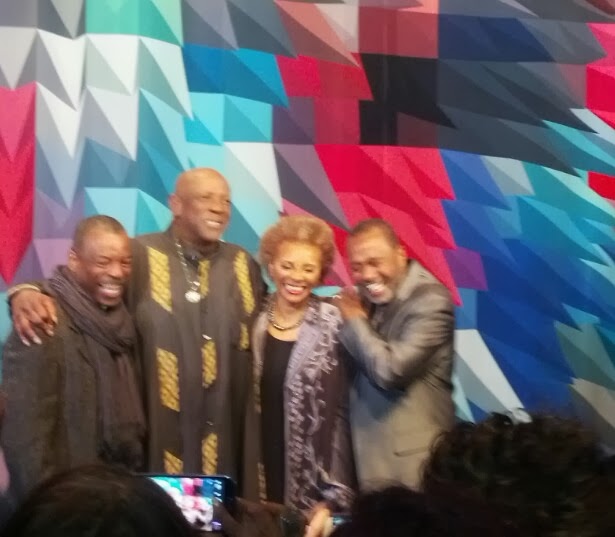 |
| From left to right: Levar Burton, Louis Gosset Jr., Leslie Uggams, and Ben Vereeen |
The panel featured actors who played pivotal roles in the TV mini-series “Roots” that premiered in 1977 and was shown on BET last winter. “Roots” was really the first program to explore the challenges, horrors, and triumphs within the realm of American slavery. It was an eye opening experience for millions of people and really helped shed a light on America’s ‘original sin.’ Actors Lou Gosset Jr., Ben Vereen, Leslie Uggams and Levar Burton, spoke on the significance of “Roots,” their roles in it, and how “Roots” continues to educate more than 30 years later.
The panel was a part of a larger series called ‘Changing the Picture’ at the Museum of the Moving Image this past February, which highlighted the works of people of color in the film and television industry.
Actress Tired of Hollywood’s Stereotypes Decides To Do Something About It
Iyin Landre is an actress. She’s determined. She also happens to be Asian.
Iyin points out how she believes her race may be a hindrance in Hollywood when it comes to getting cast in films. As she demonstrates through her video, it seems casting directors only view her through a stereotypical lens. Whether it’s been the woman who provides manicures at the nail salon, or the buttoned up scientist in a lab, Iyin believes she’s more than just an ancillary character in somebody’s picture. She aspires to be the leading lady one day.
Thanks to KickStarter, that day has come sooner then she probably realized. Iyin successfully raised more than $75K for her independent feature entitled “Me + You.” Instead of lamenting the fact that she wasn’t getting consistent work and sitting by the phone, Iyin took action and is now making the films and characters that she wants to see. Gotta respect the hustle. Here’s the Kickstarter link.
Ryan Coogler Speaks On His Sundance Institute Journey
Writer and director Ryan Coogler, who directed the critically acclaimed “Fruitvale Station,” speaks on the impact that attending the Sundance Film Insititute Labs had not only on his career, but his life.
Thoughts on Fruitvale Station
After a month delay and several months of being intrigued by the premise of the film, I finally saw “Fruitvale Station” last week. It left me feeling a number of emotions upon exiting the theater.
“Fruitvale Station” is the story of Oscar Grant and the 24 hours leading up to his death at the Fruitvale subway stop in Oakland, California, on New Year’s Day 2009. But it’s really so much more than that. It’s a story that truly does explore the human condition through Oscar’s eyes and makes the viewer see a troubled man who was trying to turn his life around.
What makes “Fruitvale Station” different than most movies is that you have some idea going in how the story will end. Anyone who has heard about the film or done any research on the case, knows ultimately that Oscar Grant will be killed. Similar much in the same way as a movie like “Titanic,” where (spoiler alert) the ship sinks, with a film like “Fruitvale Station” character development becomes all the more crucial when the audience knows the final result.
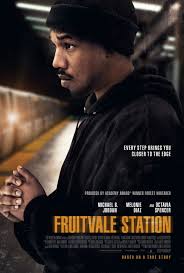
Michael B. Jordan gives an excellent performance as Oscar Grant. Through him, we see more of a 360 degree portrayal of Grant. By that I mean director Ryan Coogler is careful not to paint Grant as some figure headed for sainthood before death. Too often in dramas about people’s lives, we see heavy handed attempts to portray the protagonist in the most positive light possible with little to no faults. In essence the main character becomes reduced to little more than a cardboard cutout of virtue, instead of a fleshed out human being with emotional, physical, mental, or spiritual obstacles to conquer. This is exactly the criticism I leveled at the film “42”; I was glad to see “Fruitvale Station” didn’t follow that same script.
Over the course of the film we see Oscar not take his prospects of getting a job seriously. We see a man at times quick to anger, but even quicker to flash his smile at someone. We see a person learning to accept the responsibility of fatherhood while trying to become a more supportive partner to his girlfriend. We also witness the interactions he has with his mother (great job by Octavia Spencer) and the initial guilt she feels immediately after his death.
“Fruitvale Station” on its surface is a movie about a shooting, but really it’s a movie about the relationships between Oscar Grant and those around him. Through his friends and family we see him as a person bending in the direction of slowly, but steadily, improving his life. I would strongly recommend anyone who hasn’t yet seen it, to make an effort to watch it while it’s still in theaters. It may leave you teary eyed at points, but chances are, you’ll be better for the experience.
Cheryl Boone Isaacs Makes History
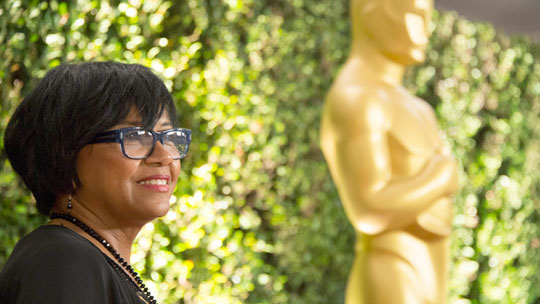
Last month Cheryl Boone Isaacs made history by becoming the first black president of the The Academy. Yes, the same Academy who votes on Oscar winners every year.
Considering the dearth of diversity in Hollywood and the lack of recognition black actors and actresses have received in regards to Oscar recognition, this news is significant indeed. Boone Isaacs has been working in the entertainment industry for a number of years now and has certainly paid her dues. Kudos to her. For more info about Cheryl Boone Isaacs you can check out this Entertianment Weekly article.
Filmmakers of Color Speak at Tribecca Film Festival
Last month the Tribecca Film Festival hosted a panel of filmmakers of color called “Look Who’s Talking.” The panel consisted of Nelson George, Tambay Obenson, Frida Torresblanco, and Terrence Nance. It was moderated by Beth Jansen. The members speak on diversity in film, opportunities for people of color within the industry and their own experiences in making and distributing their work.
Projecting Beyond The Wall
There was an interesting article a couple weeks back by the NY Times talking about the powerful impact that film was having on a group of female students. The twist? All of the students were inmates.
The article profiles one former inmate, 20-year-old Amirah Harris, and the impact that Tribecca Teaches had on her. Tribecca Teaches is a film program run by the Tribecca Film Institute that teaches students in New York City and Los Angeles the craft of filmmaking. The NY Times article speaks with one of the teachers in the program who taught at Rikers Island (a prison facility) and noted the positive impact it had on the women in her class. She also notes that she didn’t fear for her safety at all during the time she was teaching.
I remember hearing of a similar story on NPR radio host Michele Martin’s “Tell Me More” program, where a woman in Indiana who is a public school teacher, volunteers her time teaching inmates Shakespeare. She said that the inmates brought their own experiences into their analysis of the work, raising questions and positions that she as a teacher had never even considered before. She too stated that she had no fear for her own safety in the classroom, and that many of the inmates were just happy that someone was willing to take time out of their day to work with them.
In both these cases we see the power that art can have on a population deemed ‘undesirable’ by society. If art – whether it be film, Shakespeare, or poetry – can have these dramatic effects on prisoners, maybe we ought to rethink about arts being the first thing cut when school budgets get tight. Just a thought.
Still Thanking Black Starz 11 Years Later
When the month of March rolls around, I get flashbacks. You see, while this site is just under a year-and-a-half old, media –specifically film– has intrigued me for the better part of 11 years. It’s been this fascination with moving images and the stories behind them, that has left me like a small boy chasing a dream that always seems just beyond the horizon. It all started rather simply.
March of 2002 was an interesting time. I was 6 months into my freshman year of high school, my Oakland Raiders were a winning and respectable organization, and I was witnessing a miracle at the Meadowlands as Jason Kidd was leading the then New Jersey Nets on a path to the NBA Finals. It was also the time when my family upgraded from basic cable to digital cable. I had never seen so many channels before in my life. As great as the sheer volume of channels were, it was the included movie packages that caught my attention.

One of those packages was the Starz package. It was 5 channels of the Starz network and one of those channels was strictly dedicated to people of color. It was called Black Starz and it opened my eyes to a world of cinema I had never seen before. Seeing people who looked like me headlining movies on a 24/7 basis made me wonder why there wasn’t more diversity in Hollywood in the first place. It wasn’t just feature films shown on Black Starz, but shorts and documentaries as well. Ultimately, it left me with the impression that there should be more of these films shown.
From there I began writing down the films each month that had the greatest impact on me. I called the list my ‘Movies of the Month’ list. Movies such as: “To Sir With Love II,” “Love Jones,” “Joe & Max,” “Against the Wall,” and “House Party,” were just some of the few that I wrote down. Later, I would take a few documentary courses under the journalism department at my college, getting my feet wet in the industry.
Since graduating, I’ve been able to work on documentaries, shorts, features, music videos, and now a webisode. Each time learning something new and meeting new people. Now I watch movies with a whole different perspective than I did as a teenager. Once you’ve been behind the scenes and see the amount of work that goes into making a movie, you have a whole different level of appreciation for the craft.
After a few years of working on various projects (and doing odd jobs in the process to pay the bills) I started FilmSwag in the fall of 2011. I’ve certainly learned a lot and am still learning. In the 11 years since viewing Black Starz, the technology has come a long away. It’s never been easier to start filming your own projects. HD video was not readily available to many in ’02, now most cell phones come equipped with 720p or 1080p cameras. Youtube has opened up the platform immensely for aspiring filmmakers. And the rise of social media like Twitter and Facebook have made it easier to connect with one another in record time around the globe. So now in 2013 as there are many more avenues for our stories to be told, I continue to keep learning as much as possible, just like when I started out 11 years ago.
The Root Talks With Louis Gossett Jr. on Post Oscar Blues
A very good interview with Louis Gossett Jr. on the triumphs and challenges of winning an Oscar and then struggling to find work in the aftermath. Gossett speaks glowingly of working on the groundbreaking TV mini-series “Roots,” how he started out, battling alcoholism, and his current work with his foundation Eracism. Definitely worth the read.
Check it out here.

Image courtesy of The Root
 FilmSwag