Speaking Out In Spite of Justices

Just last month, Dr. Christine Blasey Ford gave public testimony that Brett Kavanaugh — a man who had been nominated to the Supreme Court — had sexually assaulted her when the two of them were teenagers. As astonishing as her testimony was, it wasn’t the first time a woman risked everything to speak out against a man nominated to the highest court in the land.

In the Fall of 1991, Anita Hill came into the public persona when she spoke out against Clarence Thomas, whom was facing his own senate judiciary hearings. Professor Hill, much like Dr. Christine Blasey Ford, would risk her own well being to make sure the world knew of the man whom she claims sexually harassed her years before. In 2016 HBO did a movie entitled Confirmation, which was about the Anita Hill hearings, that starred Kerry Washington as professor Hill and The Wire alum Wendell Pierce, as Clarence Thomas.

The Build Up

In the film we see Anita Hill working as a college professor at the time for the University of Oklahoma. She had worked with Clarence Thomas previously before accepting her position as a professor. She knew the risks involved, but went along with it anyway because she felt it was important for the public to know what she experienced in the workplace under Thomas. She knew her life was about to change, and change it did.

When the initial reports surfaced, media members began showing up to her college campus and her home. Her name was in newspapers and magazines across the country. She received threatening letters and had people publicly questioning her reputation. Despite all this, she gave her testimony anyway.

On the other end of the spectrum was Clarence Thomas. This was the man chosen by then President H.W. Bush to succeed Thurgood Marshall, who himself was the first black person to hold a seat on the Supreme Court. Thomas was portrayed in Confirmation as a man who was very measured (until his testimony) and who had been waiting for this moment for his entire life. We see him in the film with his wife and some brief interactions with this son. When the allegations of sexual harassment hit just days before his confirmation hearing, Thomas seems flabbergasted.

The Hearings

When the actual hearings begin, we see Anita Hill as calm and poised, if but a tad bit nervous, which is understandable considering the circumstances. In front of an all male senate judiciary committee (all white men at that) professor Hill and her team knew they faced an uphill battle. Still, Hill mentioned what she experienced while working with Thomas and the effect it had on her along with why she didn’t speak out sooner for fear of retribution later on down the line.

Clarence Thomas, who wound up going second in the hearings, called Hill’s testimony against him a travesty and a “high tech lynching for uppity blacks.” In the film, the senate judiciary members sit in stunned silence.

What’s interesting as well about these hearings was the impact of television. While not exactly a new medium (TVs had been around since the 1940s) compelling live television like this was still somewhat of a rarity. The concept of reality television didn’t exist yet and the internet in this era was something that was being sent out to people on CD-roms through the mail. Needless to say, television was the dominant medium and the topic of sexual harassment hadn’t received this type of national attention before, certainly not on this stage.

Millions of people saw these hearings and it was the leading topic on the major newscasts of the day. It’s safe to say that sexual harassment within the workplace wasn’t a new issue, but women had never before been given the public forum to discuss such issues at hand.

HBO Confirmation

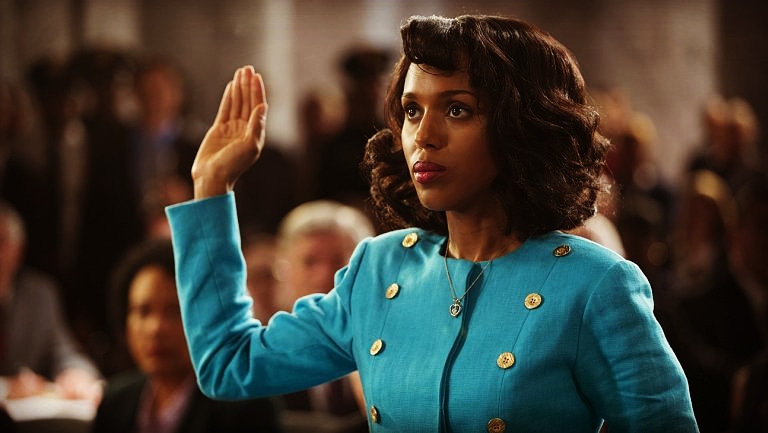
Kerry Washington as Anita Hill in the 2016 HBO Film Confirmation

The Aftermath

In the end, Clarence Thomas was confirmed as a Supreme Court Justice on October 15th, 1991. 27 years later, his now colleague, Brett Kavanaugh was confirmed as well. Both men faced serious questions of their character. Both men had women speak to the failings of said character and both men got confirmed anyway.

Anita Hill would return to the University of Oklahoma lauded as a hero and would come back to a flood of support letters from women around the country expressing their gratitude and own stories of harassment. The following year would be known as ‘The Year of The Woman’ as women ran for office and were elected in record numbers up to that point.

For Dr. Christine Blasey Ford, the future is still somewhat murky. She reportedly had to move her family from their home and left her teaching position due to threats made against her. Her words did not fall on deaf ears however, as many were moved to speak out at what they saw was terrible decision to appoint Kavanaugh to the Supreme Court in the face of her testimony. With another national election soon, we’ll see if Dr. Ford’s testimony leads a similar march to the polls in the way that professor Hill’s did more than 25 years ago.
When Being Employed Isn’t Enough: The Attempted Shaming of Geoffrey Owens

“Sometimes, you do what you gotta do.”

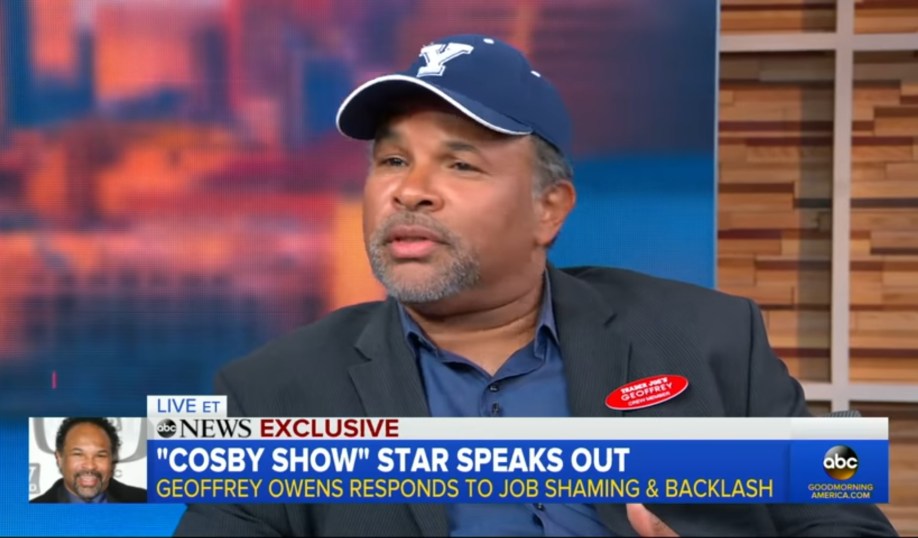
Last month, Geoffrey Owens was bagging groceries at a Trader Joe’s in suburban New Jersey, when someone recognized him, snapped a photo, and sent it to a tabloid. The story was soon picked up by Fox News with what can only be described as attempt to embarrasses Owens, but it proved to be a teaching moment into what many working creatives go through.

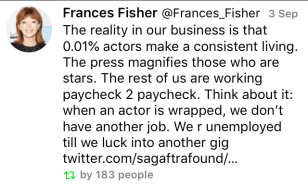
When most people think of Hollywood actors and actresses the same names probably come to mind: Denzel Washington, Julia Roberts, Brad Pitt, George Clooney, and Meryl Streep, just to name a few. While these actors are internationally known and recognized for their work, truth is, there are literally thousands of actors fighting to maintain their dream by working everyday jobs. According to a 2013 study by the National Endowment for the Arts, more than 271,000 people in the entertainment industry held second jobs. This was what Geoffrey Owens was doing in relative anonymity until his photo went viral.

IMG_4593

Geoffrey Owens has been an actor for over 30 years now. His most famous role came when he was on the The Cosby Show. Since then, he has been what you would describe as your typical working actor: doing plays, television, films, and teaching on the side as well.

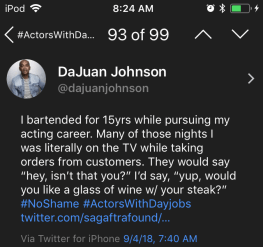
It’s ironic that this story originally came out around Labor Day of all holidays. Many actors and creatives showed support of Geoffrey Owens by talking about their own struggles with ‘making it’ while trying to keep a roof over their head. It even started a trend of social media called #actorswithdayjobs.

IMG_4590

I know firsthand the struggle of battling creative pursuits with working to pay bills. Though I have produced feature films and worked on a multitude of projects, I’ve also been a community organizer, a customer service associate, and a canvasser, just to name a few. At the end of the day, creatives still have to eat. No matter what job I took however, I’ve always considered myself a film producer. The jobs may have changed, but my mindset never did.

For Geoffrey Owens, the unwanted attention not only brought notice to what many working actors go through, but put him back on the radar of Hollywood executives. Tyler Perry offered him a job and many others have reached out expressing their support. Owens has since left his job at Trader Joe’s by the way.

Like many creative pursuits, there are no guarantees with acting, writing, directing, or producing. There really are no safety nets with this line of work. People do what they can to pursue their dreams for as long as they can.

Maybe the next great Broadway actor is picking you up in an Uber and driving you to the airport. Maybe they’re serving you drinks at the bar down the block. Perhaps, they’re selling your next home as your realtor. Whatever the profession, chances are, you already know someone in the arts industry who’s just pushing through until they finally have their breakthrough.

Crazy Rich Asians: An Important Story and A Box Office Winner

They say the third time’s the charm and that just might be true for Crazy Rich Asians.

The surprise hit of the summer just won its third weekend in a row following its Labor Day haul. This is significant not just from a financial standpoint, but a cultural one as well. It shows that people are hungry for not only well told stories, but diverse ones too.

IMG_20180817_135638.jpg

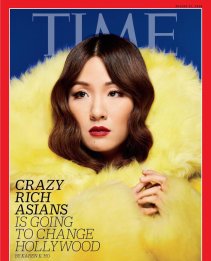
I saw Crazy Rich Asians a few weeks ago and I admit, as a person who is not usually a fan of rom-coms, I really enjoyed this one. In some ways, it’s a 2018 reboot of Cinderella. Only in this case, the ‘poor girl’ is Rachel Chu (Constance Wu), an NYU professor who finds out her boyfriend Nick (Henry Golding) is not just some average guy playing pick-up basketball at the YMCA. For Nick, unbeknownst to Rachel, comes from a very wealthy family in Singapore whom she is just beginning to know.

Over the course of the film, we see Rachel interact with Nick’s extended family, while grappling with her own identity and how she fits in with everything. There’s an interesting twist towards the end that brings the past and present into focus and gives the film a strong emotional punch. I definitely recommend those of you reading this who have not seen it yet, to give it a look.

IMG_20180906_204858.jpg

Constance Wu in her own words

As many have stated elsewhere, this really is the first Hollywood studio film to be released featuring an Asian American cast in 25 years, since the Joy Luck Club. 25 years is a really long time. I’m just old enough to vaguely remember 1993 and I can’t imagine going to the movies for over two decades and not seeing people who look like me on the big screen. While there have been other films released by Asian American filmmakers during that gap (2002’s Better Luck Tomorrow comes to mind) the paucity of roles available to them within the Hollywood system is deafening.

Will the successful release of Crazy Rich Asians change any of this? Only time will tell, but the truth is, one film shouldn’t have to bear the burden of representation for an entire community. Hopefully, Crazy Rich Asians is the start of more doors being opened for Asian filmmakers and various other groups as well. For no one should feel that seeing themselves onscreen, is little more than a fairy tale dream.

Sorry 2 Bother You: A Trojan Horse on Cash, Capitalism and Consumerism

1

I saw Sorry To Bother You a few weeks ago and it still resonates with me.

The film stars Lakeith Stanfield as Cassius Green (as in cash-is-green) and Tessa Thompson as Detroit, who is Cassius’ girlfriend. We see the two of them in the beginning living in the garage of Cassius’ uncle played by Terry Crews.

Cassius gets a job as a telemarketer and we quickly see the role that his newfound job plays in his life and his relationship with Detroit. After struggling initially in his new role as a telemarketer, Cassius gets a tip from a co-worker to use his ‘white voice’ and his career takes off from there. He goes from the new guy at his job to breaking records and eventually gets promoted to the secretive Power Caller club upstairs. That’s where we see things begin to take a turn for Cassius.

Sorry To Bother You comes out at an interesting time in America. At a time when corporate profits are increasing, but middle class incomes are stagnating, the film provides an interesting take on what it means to move up the corporate ladder. Directed by Oakland native Boots Riley, S2BY definitely has a pro worker/man against the machine type of vibe.

We see Cassius’ co-workers attempt to unionize while he himself is experiencing personal success; meanwhile his relationship with his girlfriend Detroit, becomes somewhat strained in the process. Detroit herself is an artist who uses her art in a very interesting manner to bring attention to the serious issue of the mineral coltan and the Democractic Republic of Congo later on in the film. We witness Cassius struggle with his new found wealth and appeal up until he finds out what his company is really selling.

Sorry To Bother You is a witty and engaging film with some serious themes just below the surface. It is definitely worth your money (even in New York, where seeing a movie these days is by no means cheap) and I think most people will enjoy it. Whether it’s by car, train, or on horseback, go see this film.

Netflix Bets on Black

One of most enduring images of last Sunday’s BET Awards had nothing to do with the award show itself, but of the commercials that ran during it.

Netflix seems to be expanding every year with new shows and new programs for just about any audience. Its also made a concerted effort to invest in one group that had been mostly ignored for much of television’s history: black actors. The ad was simple, yet empowering. Take a look for yourself.


Now with that being said, Netflix still has some work to do in the boardroom considering black folks make up only 4% of the people who actually work there, but this is a good start.

Filling the Void: Black Fathers Impact Felt Far Beyond the Screen

1

Black fathers have gotten a pretty bad rap lately. Usually portrayed as deadbeats or simply not as loving or caring as fathers of other groups, that perception has begun to change recently, even if it was never backed up by statistics.

T.V. and film have helped in recent years to bring black dads from outside the margins of media, and into the presence of American’s homes. Films and shows like South Central, He Got Game, and The Fresh Prince of Bel-Air, showed the nuances of black dads (or uncles) and the relationships with their children at various stages of their lives. Each portrayal left an impact well beyond the medium it was broadcast in.

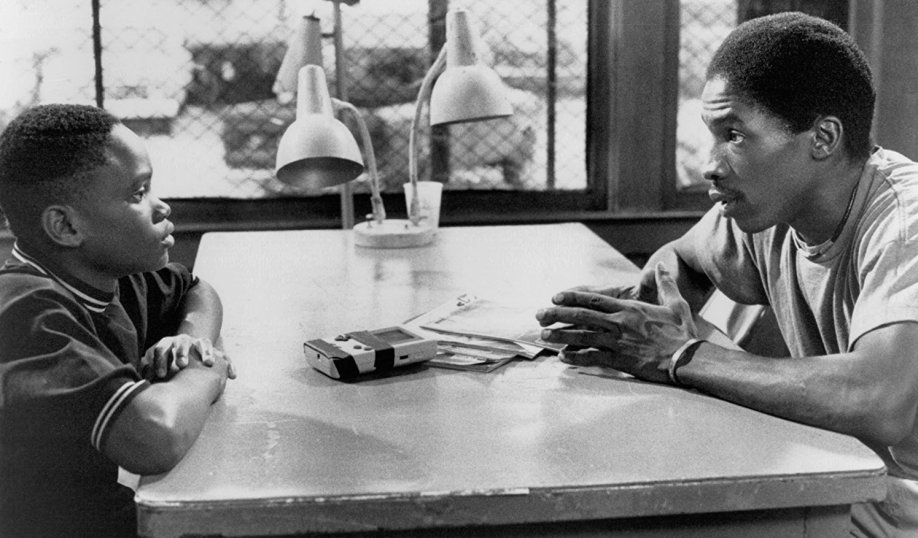
In the 1992 film South Central, we meet Bobby (played by Glenn Plummer) who is a small time dope pusher and gang member who just had a baby. He winds up doing time for his crimes and watches as his son not only grows up without him, but starts making the same bad decisions that he did just a few years earlier. We watch as Bobby eventually leaves prison as a changed man, and risks his own life to rescue his son from the streets.


With the film He Got Game, Denzel Washington also plays a formerly incarcerated father to a son living in the hood, though the circumstances are far different than South Central.

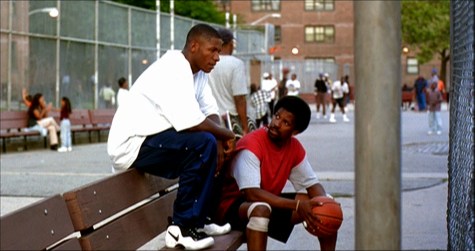
Here we see Jesus Shuttlesworth (played by NBA hall-of-famer Ray Allen) become a top prospect while playing ball during his senior year of high school. We witness him have to deal with all the trials and tribulations of his new found fame. Between the influencers, coaches, and his girlfriend tugging at him, there’s his father, Jake Shuttlesworth, currently rotting away in prison who’s just been freed temporarily. The catch is that his son must sign with the alma mater of the warden or Jake goes back to jail. We see the two fates of these men become intertwined with literally everything hinging on the outcome of a game of one-on-one.

he got game 1

Ray Allen and Denzel Washington in He Got Game

Finally, there’s everyone favorite dad: Uncle Phil. Uncle Phil, played by James Avery, who sadly passed away recently, was a staple on The Fresh Prince of Bel-Air. Uncle Phil was the stern, but fair patriarch of the Banks household, who always seemed to get into it with Will.

It was one scene however that truly showed Avery’s emotional touch, not only as an actor, but as a person. When Will’s father has to leave suddenly, Will gives a speech about how he doesn’t need him and he’ll be just fine. The thing this, it just wasn’t true. Will begins to break down and Uncle Phil rushes to  console him.

What’s amazing about this scene is that up until Will’s father leaves, everything else after that is unscripted. Will Smith, the person, actually broke down and started crying, not the character he was portraying. James Avery realized this immediately and doesn’t hesitate to hug him. For Avery, being a father meant stepping in, even when the cameras stopped rolling.

If your reading this and you’re a father, Happy Father’s Day to you. I’m curious, who were some of your favorite T.V./film dads? Feel free to comment below.

It’s ABFF Week on South Beach

The American Black Film Festival kicks off this week in its 22nd year and the festival really does give black filmmakers a chance to laugh, celebrate, and fellowship around film and cinema.

The festival is back to its original home of Miami after taken a two-year hiatus up north in New York a few years back. ABFF brings industry insiders and newcomers together for a chance to really talk about what projects are going on and how to break into the industry.

I actually had the privilege of attending the festival in 2015, one of the two years it was held in New York (2014 being the other) and had a really good time. In addition to meeting people like Andrea Lewis (you may remember her from her role on Degrassi) and Sali Richardson-Whitfield (she played ‘Angela’ in A Low Down Dirty Shame), I got to meet people like Pete Chatmon, an up and coming director who actually directed an episode of the hit series Insecure for season 3. Seeing these people in the industry and being able to speak with them made the dream of working full-time in the entertainment field feel more real.

In addition to networking opportunities, there were informative panels, the comedy show and plenty of vendors as well. It was at one of the vendor stations that I got to interact with former NFL running back turned actor Thomas Jones. I remember him telling me that acting was always something he felt he could do and once his football career ended, it seemed only logical to pursue it full-time.

ABFF 2

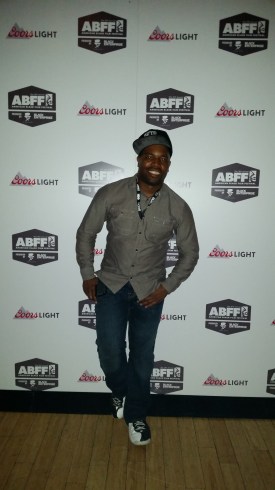
Me at ABFF in 2015

There was a panel with Kenya Barris and Tracy Ellis-Ross emceed by Larry Wilmore that talked about the behind the scenes work that went in to making Blackish a hit sitcom. It got a lil awkward though when during the question and answer session someone from the audience asked Kenya if he was hiring.

For any reading this who has even an inkling of wanting to attend an event where they’ll get a chance to learn about film and interact with people doing the work they envision themselves doing, I definitely recommend going to ABFF. I definitely hope to be back next year.

It Doesn’t Take A Hero To Make an Impact

This superhero possess the uncanny ability to make people smile while lending a helping hand. And he’s all of 4-years-old.

Austin Perine is a young kid making a huge impact in his community of Birmingham, Alabama. About once a week he puts on his cape and delivers sandwiches to homeless men and women in and around town. This has turned him into a local celebrity of sorts.

He doesn’t do it for the attention of course, but because it’s the right thing to do. After each sandwich he hands out, he says his trademark slogan: “Don’t forget to show love.” Sometimes love and a warm meal are all one needs. Much respect to President Austin.


King’s Relevance Still Resonates 50 Years Later

Dr. Martin Luther King is known for giving one of the most famous speeches in american history, yet it’s interesting how much of his other words and actions have been forgotten over the years.

This month marks 50 years since King’s assassination and tumultuous summer of 1968 that was to follow. Most people today when they think of King, probably think of his landmark “I Have A Dream” speech. They’re not wrong for thinking that, it’s just that King was so much more than just a speech.

Screenshot_20180429-215129_Gmail.jpg


You’re talking about a man who went to college at 15. A man who became one of the face of Civil Rights Movement while still in his mid-twenties. A Nobel Peace Prize winner. One of the greatest speakers this country has ever produced. A man went to prison numerous times fighting for what he (and millions of others) believed in.

These are the facts that most history text books and politicians and other figures will talk about when remembering King. The fact is however, this is an incomplete history. King wasn’t just some passive leader arguing for equality, but was active in the movement against white supremacy and income inequality.

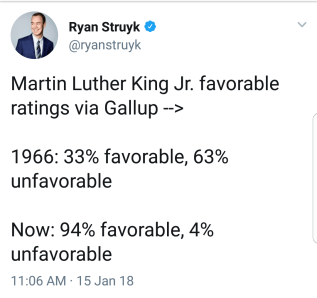
Gallup Poll

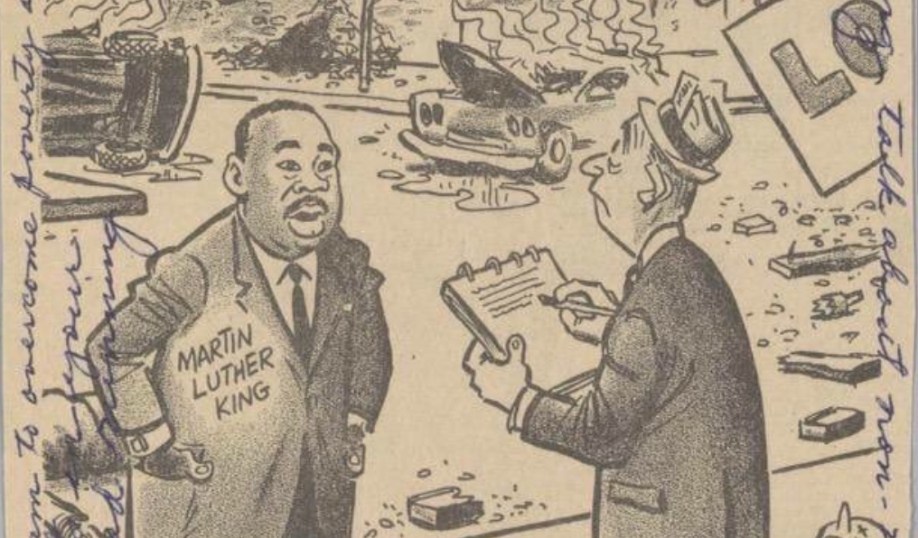
Martin Luther King wasn’t always so popular. Hindsight as they say is 20/20.

This is a man who was arrested numerous times for simply pushing for equality. A man who admonished those who said black folks should “just wait a little longer or for a more convenient time” to argue for Civil Rights – as if you can put a timeline on a people’s freedom. While King is known for speaking out about segregation and inequality, his words and action weren’t just reserved for the south, as evidenced by the treatment he received when he lead a march against housing segregation in Chicago.

Dr. Martin Luther King’s legacy today is one of reverence, if a bit softened to say the least. People talk as if the man died of old age warm in his bed instead of via a bullet to the neck at just 39-years-old. King is used against the protesters of today — specifically Black Lives Matter — as the pedestal in which people should look upon in how they should dress and behave when protesting literally for the lives. It’s ironic, the man who’s become synonymous with the fight for Civil Rights is now used to castigate those arguing for the same things 50 years later.

King wasn’t about being bigger than the people – he stood with them and marched forward with them. 50 years later, we have to continue moving forward if we truly want to honor the man’s legacy.

More than a Movie: The Cultural Significance of Black Panther

1

Some might say that based off audience reactions and box office numbers, Black Panther is more than a movie. They’d be right. It’s a movement.

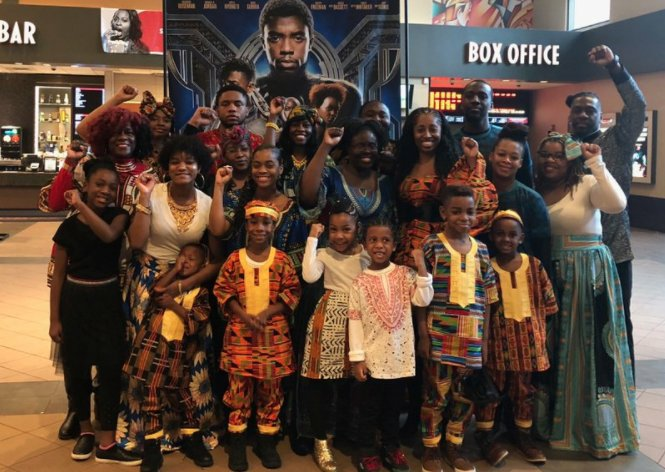
From enthusiastic audiences to one of the highest ratings of a super hero film ever by critics, Black Panther has done quite well for itself. There were reports of folks showing up with drums to the premiere last month and numerous photos of others posing next to the official film poster. The film has not only been been popular, but profitable, even beyond Marvel’s (and parent company Disney’s) own dreams.

1519582253.jpg

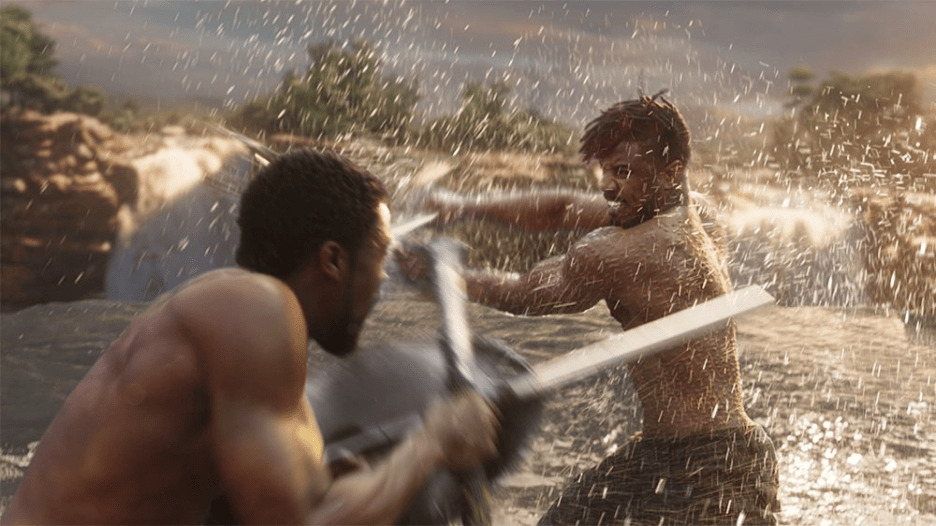
Black Panther (Marvel/Disney)

As of this writing, Black Panther has already grossed more than $1 billion globally and over $600 million domestically. To put that in perspective, it is now one of the Top 15 10 highest grossing films in American cinematic history. Much of this money is coming from people seeing the film not just once, but multiple times with friends and family.

Black Panther has been the #1 movie at the box office for five weeks running, something not seen in eight years here in the United States. Most studios are happy if they win the box office on back-to-back weekends, let alone five straight weeks. By tapping into a relatively under-served market, Black Panther is reaping the benefits, and then some.

The dearth of diverse stories in Hollywood is both a pertinent issue and a persistent one.  It hasn’t been much better in the super hero realm with black actors appearing in films but usually as sidekicks and never as the main story. Black Panther changes all that with a majority black cast and a story told from an afro-futuristic perspective.

Even the individual roles have been no less significant. From Shuri, who is the real brains behind the operation and enhances her older brother’s Black Panther capabilities, to Okoye, who is the leader of the fierce all female Dora Milaje unit that protects T’Challa and Wakanda, these roles are deeply impactful. There’s also the significance of M’Baku, played by Winston Duke, a role that was written very differently then what had been portrayed in the comics. Finally, there’s the land of Wakanda that was never touched by colonialism and has thrived as a hidden kingdom for centuries.

In recent weeks #WakandaForever has taken root and been embraced by a wide array of folks. Though this is a fictional land, its influence is very real. For black folks to simply imagine a land where they get to be themselves, far from the white gaze and troubling histories of colonialism and enslavement, is a truly refreshing thought during times of such heartache.

1520893329.jpg

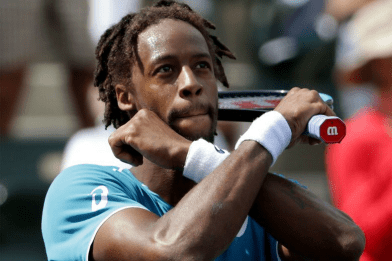
Athletes embracing #Wakandaforever

So will the commercial appeal and success of Black Panther open up the lane for Hollywood to tell more diverse stories in the future? I remain skeptical, but we’ll see. These days, the T.V. networks along with heavyweights like HBO and Netflix, seem more committed to a diverse palette of stories being told on their platforms. Clearly, there is serious money to be made in well done diverse pictures that entertain a cornucopia of audiences.

If nothing else, Black Panther shows that there is a real thirst among audiences for well done films by and about people who remind them of themselves. To see yourself onscreen is a subtle, yet powerful affirmation of one’s humanity. Inspiring a generation of kids to look and see themselves in a different light, may be Black Panther’s greatest achievement yet. #WakandaForever