Filmmakers Remember the L.A. Riots

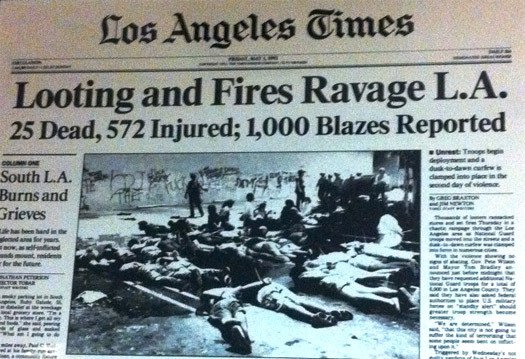
25 years ago this week, Los Angeles was up in flames over the acquittal of four police officers who were caught beating up Rodney King on videotape. Now filmmakers are using their craft to reflect on what was, and what has become of Los Angeles since that day.

NPR has a list of films commemorating the 25th anniversary of the riots, and one film of particular interest to me is “Gook.”

Directed by Justin Chon, “Gook” tells the story of two Korean-American brothers and their friendship with an African-American girl during the outset of the riots. Chon actually lived through the riots himself, witnessing his father’s shoe store get looted as a child. Chon felt it was important to tell the riots from the perspective of two Korean brothers rather than immigrants, as he points out that too often recent immigrants and those who had been living in L.A. for sometime were just lumped together as Koreans without much context.

Continue Reading

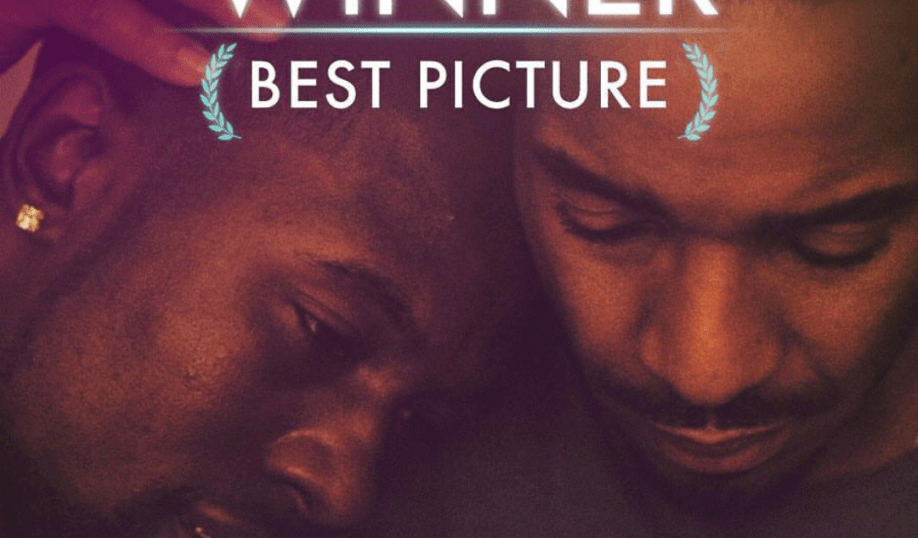
Moonlight Wins Best Picture

It’s been over two weeks since the Oscars, but the glow of ‘Moonlight’ will last for years to come.

It was powerful to see the cast and crew of ‘Moonlight’ gather round for their award, especially after Mahershala Ali had won earlier in the evening for Best Supporting Actor. The biggest blunder in Oscar history aside, I was particularly happy for director and producer Barry Jenkins, who was finally getting the due that eluded him in his earlier work.

moonlight 2

Mahershala Ali

In the Summer of 2009 I attended a symposium at the Teachers College of Columbia University, on independent black filmmakers and breaking through the wall that is Hollywood. Many of the issues brought up that day have been discussed ad nauseam among filmmakers of color: lack of funding, marketing, distribution, working within the studio system, etc. Towards the end of the program, we watched a film called ‘Medicine for Melancholy’ that told the story of two people who spend a day together in present day San Francisco. The actors Wyatt Cenac and Tracey Heggins take us into the world of two people exploring themselves – and their city – if only for mere hours. That film, was directed by Barry Jenkins.

‘Medicine fp192781_p_v8_aaor Melancholy’ was  well received by the audience that day back in 2009. We all wondered out loud though, how do
we get more films like this out to those who live outside LA and New York where the opportunities to see such work isn’t as plentiful? And where will this director go in their field and how long before they work on their next film? Eight years later, we have the answer to one of those questions.

To know that ‘Moonlight’ is only the second feature film Barry Jenkins has directed (but to most people, it’s their first introduction to him) and that it won Best Picture is all the more powerful. These stories need to be told. ‘Moonlight’ was not some big box office project and did not get the wide distribution that many films get, but it made an impact and was a an incredibly well told story. None of us could have foreseen this at the Teachers College eight years ago, but the fact that Barry Jenkins and the ‘Moonlight’ family are getting their due at the highest of levels, makes it all the more rewarding.

My 2016 Film of the Year

Some films just grab you. They wrestle with your emotions, force you to consider other perspectives, and leave you uncomfortable at moments. ‘Moonlight’ did all this to me and for that, it is my Film of the Year.

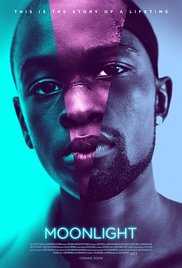
‘Moonlight’ is directed by Barry Jenkins and it takes place in Liberty City, a smoonlightuburb of Miami. It is here where we meet our protagonist, Chiron, as a young boy constantly being picked on and bullied. It is also at this point that we meet Chiron’s best friend, Kevin. The two strike up a quick rapport and their friendship continues into high school.

It’s here where the film really picks up as Chiron begins to come more into himself and his sexuality while also dealing with the accompanying drama that comes with adolescence. The friendship between Kevin and Chiron deepens and the two even share a moment on an abandoned beach. The bullying however, doesn’t stop, and Chiron responds in a way that is both frightening and cathartic. In the last third of the film, both Chiron and Kevin are grown men with separate lives and their relationship has evolved too with the years.

This is a very basic synopsis of ‘Moonlight’ and I’d be remiss if I didn’t mention young Chiron’s relationship with the neighborhood drug dealer Juan (played by Mahershala Ali) and his girlfriend Teresa (played by Janelle Monae). There’s also Chrion’s deteriorating relationship with his drug induced mother, who just so happens to be a client of Juan’s.

Watching ‘Moonlight’, I was moved by the story and the cinematography held
my attention, in particular the various close up shots of Chrion and Kevin through the years. We literally see boys become men dealing with a cornucopia of emotions in ways we rarely see by men in American cinema – much less so by black men at that. What also is refreshing about ‘Moonlight’ is that the characters aren’t one dimensional representations of certain beliefs or stereotypes. For instance, Juan, though he may be the neighborhood drug dealer, he takes in a young Chiron and accepts him in ways Chiron’s own mother refuses to.

For its depth, character development, story cohesion and cinematography, ‘Moonlight’ earns my 2016 Film of the Year nod. Nobody should miss the picture regardless of their background, for I believe everyone can take something away from it.

5 Years of FilmSwag

The Fall of 2011 doesn’t feel all that long ago, but at the same time feels like ages ago if that makes any sense.

Yesterday September 26th, marked 5 years to the day that this blog was founded. 5 years in the books and I’m still learning about this blogging thing if we’re being honest. I don’t post nearly as much as I used to, but nevertheless, FilmSwag remains near and dear to my heart and a platform I view as important as ever in these trying times.

I started this blog out of a need to say something about people of color (specifically black people) and how it related to film and media in general. It was an interesting time as media was also evolving. In 2011 the word ‘web series’ was still just coming into the public lexicon. Now we have people who have used the platform to make the jump into the more traditional world film and television including one awkward black girl who’s come a long way from her Youtube debut in 2012.

Over the last 5 years video has gone from a nice thing to have to a must-have for many media companies. With the rise of HD video and the proliferation of smartphones, video is as ubiquitous as its ever been. Even Instagram, known more for its photo filters at first, now in features 1 minute videos up from 15 seconds earlier this year.

With as much video has increased over the last 5 years, not all of it has been for the better. People of color are still underrepresented in the major Hollywood studios and media outlets alike. Also, as more people have cellphones with video capabilities, we’ve seen a number of black men end up dead at the hands of the police, just within the last few months alone. Police brutality and mistrust among the community it serves are not new problems, just newly exposed problems with rise of new technology.

I’ve covered a number of topics beyond film and cinema on this blog, and intend to keep doing so. I think it’s important to touch on issues that may make some folks uncomfortable for it is there where the fight for real solutions begin. Let’s continue to keep getting educated together.


The Significance of the BET Awards

Sunday night I was playing NBA 2K16 and realized I had messed up.

I switched off my Xbox and turned on my TV only to realize I had missed the Beyonce and Kendrick Lamar performance. And with that, the BET Awards show kicked off and the disparate parts Black Twitter came together to laugh, criticize, throw shade, rbet-awards-2016ejoice, and all in all just enjoy the moment.

The BET Awards got off to a bit a rough start 15 years ago as it had to -like most brand new programs- find its sea legs of sort and figure out what it wanted to be. Was it going to be primarily focused on the awards? Was it going to be more about the performances? Was it going to be more about who showed up and shown out on the red carpet? In reality, it’s all of these things under the umbrella of celebrating black excellence in music and film. The rise of social media – in particular, Twitter – has only helped fuel this growth but allowing the viewer at home to become an active participant.

The most stirring performance of the evening belonged not to a musical act, but an actor during a speech – Jesse Williams. Williams, known primarily for his work on Grey’s Anatomy, gave a speech that was so poignant and powerful, that people rose from their seats and clapped. He addressed issues regarding police brutality, black lives matter, and the freedom that black people are still seeking some 397 years after our arrival.

http://c.brightcove.com/services/viewer/federated_f9?isVid=1&isUI=1

It’s moments like this that keep the BET Awards fresh, hip, and relevant in an ever changing media landscape. I look forward to next year’s version.


FilmSwag is Back


This has certainly been a long time coming. For those of you who may be new to FilmSwag, this is a blog I started almost 5 years ago to discuss film, television and media, as it related to people of color within society. So that could encompass everything from movie reviews to how the media is covering the Black Lives Matter movement. Being that I’m a one man bad, these things are told from my perspective but I do try to get a number of different voices on an issue. I think it helps foster different ways at looking things and perhaps solutions to problems that we might not have considered.284545_623306616539_6375252_n.jpg

My own background in film began 14 years ago when my mother subscribed to a movie package with our local cable company that introduced me to the channel Starz in Black. For the first time in my life I saw people who looked like me in film on a regular basis 24/7. At the time, there were no other channels on television quite like Starz in Black. Seeing these images gave me an idea. “There should be more of this,” I said to myself at the time. And ever since then, I have been working to tell more stories of people of color who too often have their voices silenced or simply ignored by mainstream society. This site is a continuation of that work.

In moving to WordPress, I hope to not only reach a larger audience, but also change some things up in terms of layout and presentation for the site. As it stands, the site is a work in progress and I kind of equate this first day as a step in its continued improvement. So to those of you who started reading FilmSwag way back in 2011 and have followed me onto this new platform, I certainly do appreciate. And for those of you new readers, hopefully you enjoy the content, and if not, your page-view was appreciated anyway. Let’s continue to keep getting educated together.


Peace,


Warin


Breaking Down the #OscarsSoWhite Blowback

When the Oscar nominations were announced earlier this month, people were once again stunned. For the second time in as many years, all the nominees for the acting and directing categories (with one exception) were white. Same goes for the Best Picture nods, which all centered on stories revolving around predominately white casts. As you can imagine in the social media age that we live in these days, the blowback was as swift as it was predictable .

Within hours the #OscarsSoWhite hashtag was trending and a number of people in and outside the Hollywood industry were being asked to opine on the topic at hand. I found it interesting the number of ‘mainstream’ news organizations that were quick to lambaste the Academy Awards for their lack of representation, when in fact many of their own newsrooms aren’t exactly beacons of diversity either. Hey Pot, say hello to my main man Kettle.

This issue of a lack of diversity at the Oscars is hardly a new one. The fact that only a handful of black folks (not to mention Latinos and Asians) have won an Oscar since Hattie McDaniel became the first to do so back in 1940, is sadly not surprising. What is surprising is that The Academy (the group of individuals that vote and determine who is nominated and who wins an Oscar) still does not see the error in its ways.

For starters, The Academy’s membership is overwhelmingly white and male and older than the general population. That right there should tell you something. Now current Academy president Cheryl Boone Issacs (the first person of color to hold this title), was dismayed at the lack of diversity and recently pledged to implement some changes to address the issue. The fact remains however that the Academy Awards are simply a reflection of the Hollywood industry. Which is to say that as the industry currently sits, many people of color simply are not getting the opportunities in front of, as well as behind the camera that many of their white counterparts have no problem acquiring. Much of this can be attributed to who runs the major studios and who they decide to bankroll.

It’s no secret that there is not a single person of color in Hollywood who can Greenlight a film. By Greenlight, that means they have final say on whether or not a picture is made. So when people wonder about the paucity of roles for black folks in the studio system, there’s your Exhibit A. Many of the directors and producers within the studio system just so happen to look like the people who head these same companies, so it’s a bit of an ‘Old Boys Network’ if you will. That’s not to suggest that Hollywood won’t take chances on black actors or directors, they’re just simply not as likely to when compared to whites in the same positions.

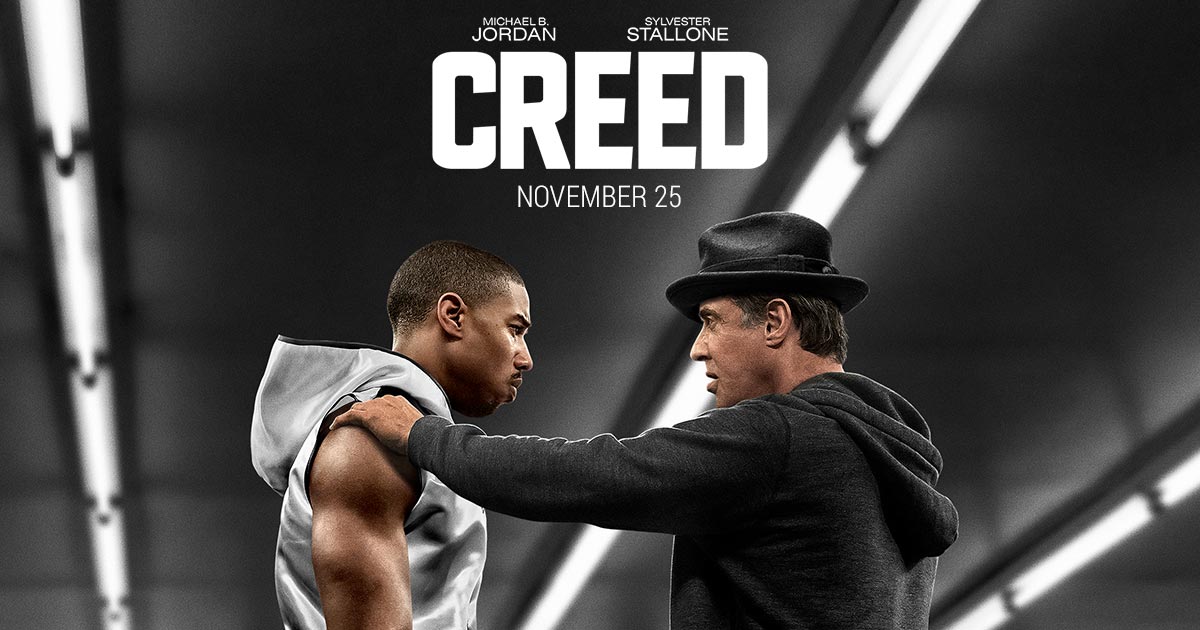
Outside of Stallone, CREED was shut out of the Oscars

The old Hollywood system is slowly changing however. While often feeling like their stories weren’t being told, or being told in a way where whiteness still occupied the frame, many creatives of color have been using different avenues to get their material out. One such avenue has been the independent route. Ava DuVernay started AFFRM (which is now called ARRAY) which markets and distributes films by people of color, many of whom whose stories don’t fit the traditional studio model. Groups like ARRAY help amplify the voices of members of communities who for far too long have had their stories silenced for a number of reasons. Speaking of independent projects, “Dope,” one of my 2015 movies of the year, was an independent film.

As much progress continues to be made by black and brown creatives outside the realm of Hollywood, the question must be asked when will they truly be welcomed in from the wilderness so to speak? I don’t have a concrete answer to that, but clearly Hollywood and the The Academy will be tasked with finding the appropriate solutions. Perhaps the studios should start sending some recruiters to HBCUs, like their Silicon Valley brethren have recently started doing. Or maybe investing more in the local communities in the Greater Los Angeles Area to get kids from various backgrounds in the studio pipeline. For before you can get nominations, you need opportunities, and Hollywood right now is failing at both.


My 2015 Movies of the Year

Once again it seems like another year has flown by. It feels the older I get, the quicker time seems to move.

In terms of pure post output, this was my least productive year on the blog since its inception four years ago. I could use the same excuses of work, side projects, and other commitments, but the truth is, I have to be more disciplined in my time management and more consistent in my posts. With that said, though my posts were down considerably this year, I did manage to make it out to see some quality films.

Last year I didn’t have a movie of the year, but there were nevertheless quality films I saw like “Beyond The Lights” for example. For 2015 my movies of the year are “Dope” and “Chef.” I picked these films for very different reasons above the other titles I saw over the last 12 months.

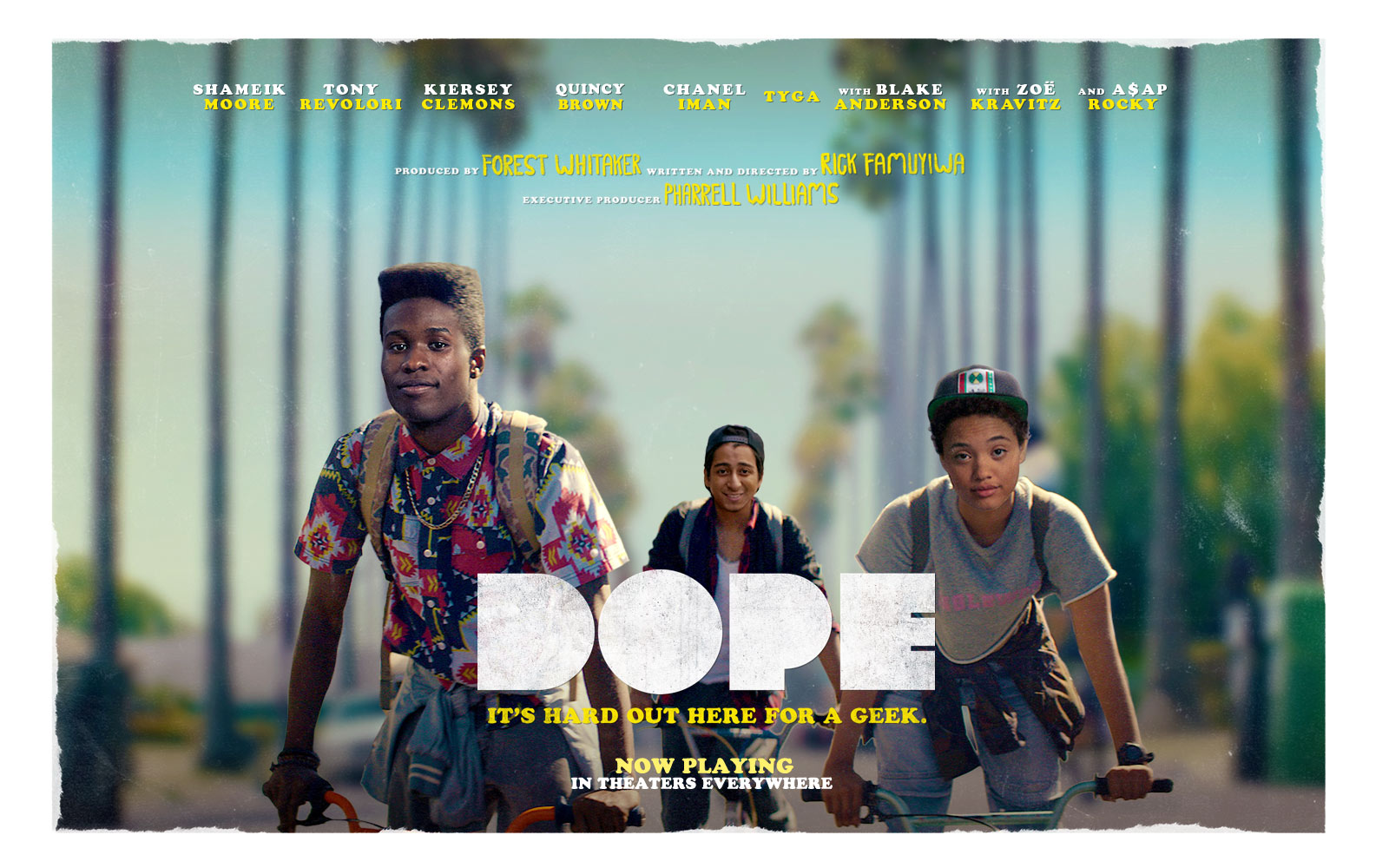
I saw “Dope” while attending the American Black Film Festival last June and the film actually headlined the event. “Dope” centers around a high school senior named Malcolm played by Shameik Moore, and his two friends who are nerds at their local high school in Inglewood, California. Malcolm and his friends get invited to a party where a shootout occurs and Malcolm runs out only to find the drug Molly has been slipped into his bag. To make matters worse, he realizes he must sell the drug without being caught/killed all the while applying to get into Harvard. While the story takes place in the hood and involves drug dealing, I wouldn’t consider this a ‘hood movie.’ The actors and director Rick Famuyiwa do a good job of making this film feel lively and even somewhat innocent despite its serious subject matter. Zoe Kravitz is very good in this film as well.

“Chef” is one of the more heartwarming films I’ve seen in years. The story involves chef Carl Casper, played by Jon Favreau, who works at an upscale L.A. restaurant and wants to change up the menu and inject some of his own style into the meals. When he is denied by the owner and told to follow the menu as is, he follows orders and is subsequently ripped by a noted food critic for being bland and boring. Casper goes off on the food critic in a very public manner befitting our cellphone crazed TMZ reality that is 2015 and ends up quitting his job.

Unemployed and unable to find suitable work, Casper’s ex-wife played by Sofia Vergara, suggests he go down to Miami and rent out a food truck owned by her ex-husband Marvin, played by Robert Downey Jr. Hesitant at first, Casper takes her up on the offer and he begins to build his business. Along the way one of his former co-workers comes along to join him and so too does his son. The three of them start out locally in Miami before taking their show on the road and travelling throughout the South, building buzz along the way via Twitter.

This film is incredibly multi-layered. There’s the father-son dynamic, the following your dreams aspect, and even a touching resolution at the end. I highly recommend this film to anyone, and it’s also a movie that would be appropriate for just about any age group. It’s currently playing on Netflix as of this writing. Here’s to more quality films in 2016.

2015 Honorable Mentions: “The Martian” and “Creed”

November Rule

The holidays are upon us and that means some dudes are having second thoughts about spending money and committing to their mates.

That is the basic premise of the movie “November Rule” which stars Mo McRae and Fresh Prince of Bel Air alum Tatyana Ali. They start out as partners, but McRae’s character ‘Steve’ develops cold feet as the calendar flips to November and decides to dump Ali’s character ‘Leah’ — just as he has every previous girlfriend. Except this time Steve has a change of heart and realizes Leah is a true catch who he didn’t truly appreciate until she was gone.

Along the way Steve’s two friends represent both sides of the commitment fence: one is happily married and the other is happily single until he meets his new flame played by Lala Vasquez. All-in-all this is an enjoyable rom-com and worth a few good laughs.

4 Years In

In the Fall of 2011 I sat down in front of my computer armed with an idea and plenty of time on my hands (I just finished a film and was, shall we say, unemployed at the time). From that, was the start of FilmSwag. The blog celebrated it’s 4th birthday this past weekend. My baby is slowly growing up.

Since the blog has begun, I’ve been amazed at the ever evolving deep pool of roles that people of color have been getting in television (more so than film) these last few years. One of my early articles covered the fact that Taraji P. Henson openly complained that she was not featured in any of the ads or promos for the CBS series “Person of Interest.” Four years later, it’s safe to say Taraji has had the last laugh thanks to some show on Fox.

It hasn’t just been more roles either, but whole families coming into the fray. Two of the more well known shows “Blackish” and “Fresh off the Boat,” aren’t just shows with families that happen to be black and Asian, but make a point to tell the narrative through the perspective of those characters. In order to tell these stories, you need to have writers who are familiar with everyday colloquiums and norms of a particular culture. These shows reflect that.

As for the future of this blog, I’m working on some upgrades and new content. I do admit, I haven’t posted much this year, but I haven’t forgotten about you guys, the readers, and I will continue to try and put good material out there. Here’s to another 4 more years at least. Peace.